
Strategic Blueprint of India’s Ureteral Stent & Endourology Manufacturing Landscape
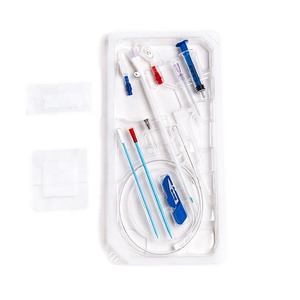
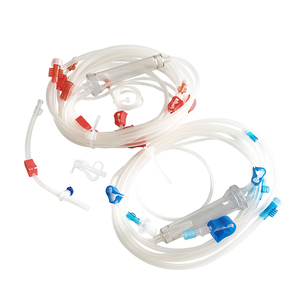
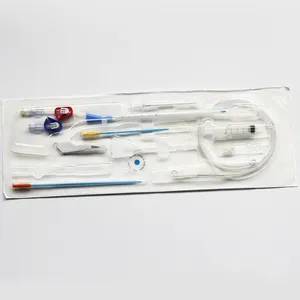
The global demand for high-precision endourological disposables—specifically double J (DJ) ureteral stents, nephrostomy drainage kits, and vascular/dialysis access catheters—has experienced an unprecedented structural pivot toward Indian manufacturing hubs. Factors driving this migration include India's robust polymer extrusion infrastructure, stringent adherence to ISO 13485:2016 quality systems, and competitive cost-efficiency without compromising biocompatibility standards.
As endourological procedures like Retrograde Intrarenal Surgery (RIRS), Percutaneous Nephrolithotomy (PCNL), and Ureteroscopic Lithotripsy (URSL) expand rapidly across both emerging economies and developed healthcare systems, the technical specification requirements for ureteral stents have become increasingly rigorous. Modern procurement directors require not merely catalog pricing, but comprehensive bio-material dossiers, durometer thermal behavior charts, hydrodynamic flow rates, and biological indicator release data.
Core Technical Takeaway: Modern Indian medical device manufacturers like Shree Umiya Surgical Pvt. Ltd. (Mediplus India) have established state-of-the-art extrusion lines in Gujarat's medical industrial zones (Vatva, Ahmedabad), achieving compliance under EU MDR 2017/745 pathways and CDSCO Medical Device Rules (MDR 2017).
Material Science & Mechanical Engineering Benchmarks
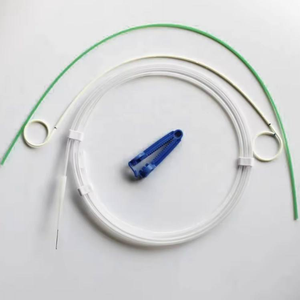
A high-performance ureteral stent must reconcile two opposing physical criteria: high column strength (pusher firmness) for traumatic insertion through obstructed ureters, and ultra-soft body compliance at 37°C body temperature to minimize bladder irritation, trigonal discomfort, and vesicoureteral reflux.
| Performance Characteristic | Technical Specification Target | Clinical Significance |
|---|---|---|
| Polymer Composition | Thermosensitive Polyurethane (TPU) / Medical Silicone | Prevents encrustation while ensuring patient comfort. Softens at body temperature. |
| Durometer Hardness | 85A to 95A (Insertion) → Softens to ~70A (In-Vivo) | Prevents stent buckling during placement while reducing ureteral spasm post-procedure. |
| Surface Coating | Hydrophilic Polyvinylpyrrolidone (PVP) Lubricious Layer | Reduces insertion friction coefficient by over 70%, eliminating mucosal tearing. |
| Radiopacity Index | 18% to 25% Bismuth Subcarbonate / Barium Sulfate | Ensures clear visibility under C-arm fluoroscopy and plain X-ray (KUB) verification. |
| Coil Memory (Pigtail) | 360° Double Retention Loop Memory Retention | Prevents proximal or distal stent migration into the renal pelvis or urinary bladder. |
| Drainage Hole Geometry | Spiral / Alternate Offset Radial Punching | Maximizes lumen flow rate while preventing tissue invagination and clot blockage. |
In addition to material formulation, the lumen-to-wall ratio plays a critical role in preventing post-procedure stone fragment impaction. Advanced Indian OEM facilities utilize laser-guided side-hole punching machines to ensure burr-free drainage eyelets, preventing lumen occlusions during long-term dwell periods (ranging from 30 days up to 12 months for specialized oncological stents).