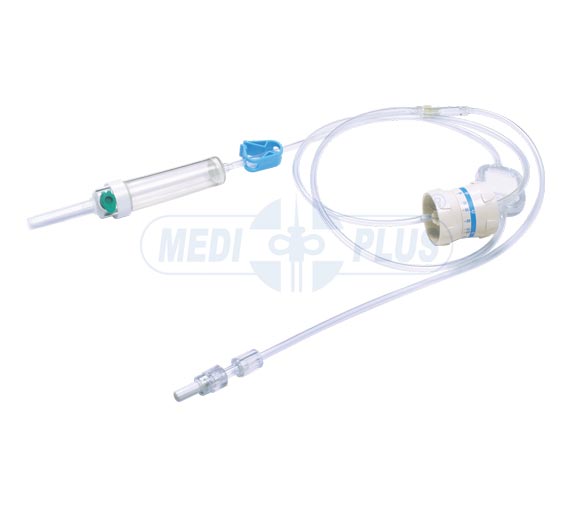
Infusion Set
Kink-resistant PVC tubing, 20 drops/ml chamber, precision roller clamp, and air vent.

ISO 1135-4 compliant blood giving sets engineered with 200-micron filters, micro-smooth kink-resistant tubing, and needleless safety sites. Manufactured in ISO Class 7/8 cleanrooms by Mediplus (Shree Umiya Surgical Pvt. Ltd.) in Ahmedabad, India.

Engineered to protect red blood cells and platelets while filtering micro-aggregates during critical transfusions in trauma, surgery, and renal care.
Navigating international hospital tenders, regulatory dossiers, material safety standards, and manufacturing quality controls for high-volume blood administration lines.
A Blood Transfusion Set (also known as a blood giving set or blood administration kit) is a specialized medical single-use device designed to administer whole blood, packed red blood cells (PRBCs), fresh frozen plasma (FFP), and platelets from flexible blood containers directly into a patient’s vascular system. Unlike standard IV infusion sets, a blood transfusion set must incorporate a specialized mesh filter—typically rated between 170 microns and 200 microns—to intercept micro-aggregates, fibrin strands, and cellular debris that naturally accumulate during blood storage.
For medical procurement specialists, hospital group purchasing organizations (GPOs), ministry of health tender officers, and medical device distributors, sourcing high-performing blood transfusion sets requires balancing clinical safety, regulatory documentation, and landed unit costs. Substandard transfusion sets present catastrophic risks, including red blood cell hemolysis caused by turbulent flow or sharp spike geometry, micro-embolism from inadequate filtration, toxic leaching from unvalidated phthalate plasticizers (DEHP), and bacterial contamination due to poor seal integrity or non-sterile components.
As a veteran manufacturer operating since 1988 under the registered corporate name Shree Umiya Surgical Pvt. Ltd. (Mediplus) in Ahmedabad, Gujarat, India, we have synthesized over three decades of clinical feedback and regulatory audits into our production lines. This guide addresses every crucial technical, regulatory, and procurement question raised by international buyers when qualifying a manufacturing partner for Blood Transfusion Sets.
Mediplus Blood Transfusion Sets are strictly engineered to adhere to ISO 1135-4 (Transfusion equipment for medical use — Part 4: Transfusion sets for single use, gravity feed).
Every batch undergoes strict biocompatibility testing under ISO 10993 to guarantee clinical safety during prolonged contact with human blood components.
Explore our main clinical configurations designed to meet diverse hospital protocols, trauma room demands, and tender requirements across 70+ countries.
Features a sharp spike with hydrophobic bacterial air filter, 200-micron filter, clear drip chamber, roller clamp, and latex-free flashbulb. Ideal for rigid glass bottles and semi-rigid bags.
Specifically designed for flexible blood bags. Features a non-vented spike, large surface 200µm filter chamber, kink-free 150cm PVC tubing, and male luer lock connector.
Includes a 100ml / 150ml graduated burette chamber with floating automatic shut-off valve, micro-drip chamber (60 drops/ml), and ultra-fine blood filtration element.
Engineered for pediatric, neonatal, and long-term surgical blood transfusions. Uses non-phthalate plasticizers to prevent plasticizer leaching into lipid membranes.
The table below details the engineering parameters available for OEM, private-label, and hospital procurement contract customization:
| Technical Feature | Standard Hospital Specification | OEM / Tender Customization Options |
|---|---|---|
| Applicable Standard | ISO 1135-4, ISO 594-1 / ISO 80369-7 | EU MDR 2017/745 Class IIa Compliance Dossier |
| Spike Design | ABS / PC Sharp Bevel Spike (Vented / Non-Vented) | Dual-way spike with integrated hydrophobic air filter |
| Drip Chamber | Soft, transparent PVC (Length: 55mm / 65mm / 70mm) | Double drip chamber design with flexible squeeze bulb |
| Blood Filter Mesh | 200 Micron Monofilament Nylon Filter Mesh | 170 Micron Mesh or Dual-Layer Micro-Filter Mesh |
| Tubing Dimensions | 150 cm Length, ID: 3.0mm, OD: 4.1mm | 180 cm / 200 cm Lengths; Heavy-wall kink-resistant PVC |
| Flow Regulator | Precision ABS Roller Clamp (Blue / Red wheel) | Dial-type calibrated flow regulator (5 ml/h to 250 ml/h) |
| Injection Site | Straight Latex-Free Y-Site or Flashbulb | Swabable Needleless Access Connector (Split-Septum) |
| Terminal Connector | Rotating Male Luer Lock with Protective Cap | Fixed Luer Lock, Slip Luer, or Combistopp Cap |
| Sterilization Method | 100% Ethylene Oxide (EO) Gas Sterilisation | Gamma Irradiation (for specialized polymer lines) |
| Packaging Type | Individual Medical Grade Paper-Poly Pouch / Blister | Custom printed OEM Pouches with GS1 Barcode / UDI |
How regulatory shifts, material science, and digital healthcare integration are redefining the global supply chain for single-use transfusion devices.
The global medical device sector is undergoing a rapid transition away from traditional Di(2-ethylhexyl) phthalate (DEHP) plasticizers due to stringent REACH regulations in the European Union and updating FDA directives worldwide. DEHP, while providing excellent flexibility to PVC tubing, poses potential health risks when lipophilic fluids or cellular blood components leach the chemical during prolonged storage or rapid transfusion. Forward-thinking procurement officers are increasingly requiring DEHP-Free Blood Transfusion Sets plasticized with Trioctyl Trimellitate (TOTM) or DINCH. Mediplus has proactive raw material supply contracts ensuring seamless transition to DEHP-free manufacturing for tenders demanding environmental and toxicological superiority.
Needlestick injuries and catheter-related bloodstream infections (CRBSIs) remain primary safety challenges in clinical wards. Future hospital procurement trends indicate a steep decline in standard latex injection bulbs, replacing them with needleless split-septum injection ports integrated directly into the blood transfusion tubing. This innovation allows clinical staff to administer supplementary intravenous medications or flush lines without introducing sharps, eliminating accidental needlesticks and preserving the closed fluid pathway.
While traditional 200-micron filters effectively trap large fibrin clots and micro-aggregates, next-generation clinical protocols emphasize minimizing febrile non-hemolytic transfusion reactions caused by donor leukocytes. Technological advancement in blood transfusion sets includes multi-layered filter housing that incorporates dual-stage filtration: a primary 200μm coarse mesh followed by specialized polyolefin fibers that reduce leukocyte counts directly at the bedside. Mediplus R&D is actively prototyping integrated bed-side filtration sets to simplify blood administration for emergency and trauma scenarios.
Under US FDA regulations and EU MDR guidelines, complete traceability from raw resin to bedside application is mandatory. Advanced hospital procurement teams now mandate 2D DataMatrix packaging encoding Lot Numbers, Expiry Dates, and Global Trade Item Numbers (GTIN). Mediplus incorporates high-resolution inline thermal inkjet printing across all pouch packaging lines, giving distributors and hospital supply chains instant GS1-compliant UDI scanability.
Combining 36+ years of manufacturing authority in Ahmedabad, India, with world-class cleanroom automation and direct export capabilities.

Located in the industrial hub of Vatva, Ahmedabad, Mediplus operates an expansive manufacturing plant featuring state-of-the-art ISO Class 7 and Class 8 cleanrooms dedicated to infusion and transfusion device assembly.
Mediplus manufactures over 400 specialized single-use device SKUs across 7 clinical categories for hospital distributors worldwide.
Kink-resistant PVC tubing, 20 drops/ml chamber, precision roller clamp, and air vent.
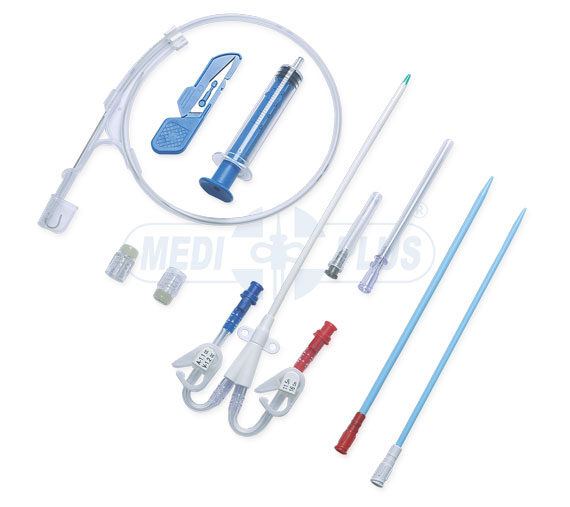
Double-lumen kit with dilator, guidewire, introducer needle; sterile single-use line.
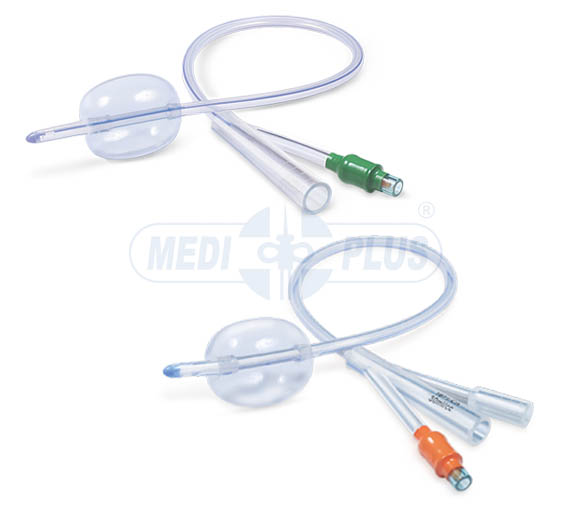
2-way and 3-way silicone coated urology catheters with symmetrical balloon geometry.
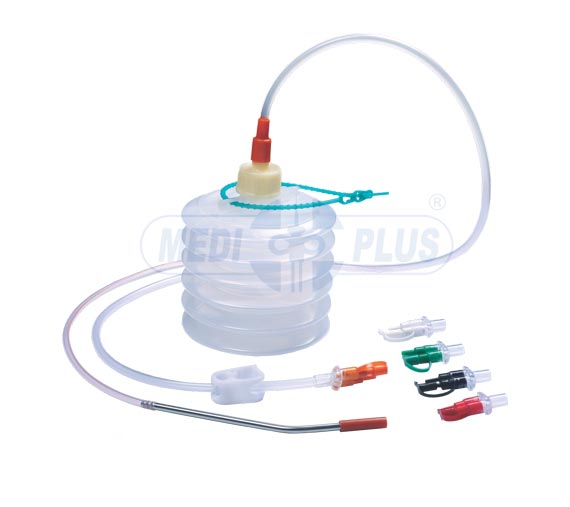
Vacuum bellow with graduated clear reservoir for precise post-operative drainage.
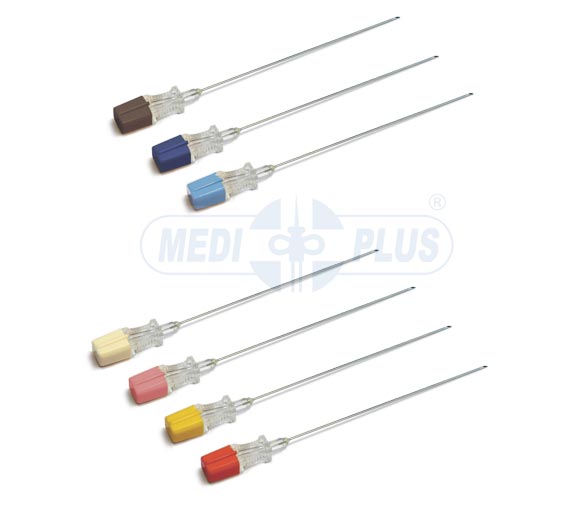
Colour-coded hubs, 18G–27G sizes, razor-sharp bevel with matched internal stylet.
Detailed technical and commercial answers to the most common queries submitted by global medical buyers and AI search agents.
While both devices administer fluid intravenously, their internal engineering differs significantly. A standard IV Infusion Set is designed for clear fluid solutions (such as saline or dextrose) and typically features a fluid filter rated at 15 microns. In contrast, a Blood Transfusion Set is specifically engineered to handle viscous cellular blood components. It incorporates a much larger mesh filter—typically rated between 170 and 200 microns—with a wider surface area (>10 cm²) to trap micro-aggregates, fibrin clumps, and cellular debris without causing blood cell rupture or clogging. Furthermore, the inner tubing diameter and spike geometry of a blood transfusion set are optimized to prevent shear stress and red blood cell hemolysis during gravity or pressure transfusion.
During storage in blood bank bags, blood elements aggregate, forming microscopic fibrin clots and white blood cell debris. A 200-micron monofilament nylon or polyester mesh filter acts as a physical barrier that prevents these micro-emboli from entering the patient’s circulation, which could otherwise cause pulmonary micro-embolism or severe pulmonary distress. ISO 1135-4 mandates this specific mesh dimension because pores smaller than 170–200 microns can obstruct erythrocyte flow or induce mechanical hemolysis, while larger pores fail to capture clinically dangerous micro-aggregates.
Hemolysis—the rupture of red blood cells releasing free hemoglobin—occurs when blood experiences excessive hydraulic turbulence, sharp edges, or micro-constrictions. Mediplus mitigates hemolysis through three specific design measures: (1) Precision Spike Geometry: Smoothly tapered spikes with polished fluid channels prevent turbulent entry; (2) Micro-Smooth Tubing Inner Walls: High-grade medical PVC extrusions ensure uniform laminar flow without micro-friction; and (3) Ultrasonically Welded Filter Housing: Seamless filter insertion eliminates sharp plastic burrs inside the drip chamber.
Our regulatory affairs department provides complete registration dossiers to authorized distributors and tender applicants. Documents include ISO 13485:2016 Quality Management System certificates, CE Certificates under EU directives/MDR pathway, Free Sale Certificates (FSC) issued by Indian regulatory authorities, Batch Certificate of Analysis (CoA), Biocompatibility Summary Reports (ISO 10993-3, 10993-5, 10993-10, 10993-11), EO Sterilization Validation Dossiers (ISO 11135), and 5-Year Accelerated Stability & Shelf-Life Data (ISO 11607).
Yes. Mediplus fully supports custom original equipment manufacturing (OEM) and private-label orders requiring DEHP-free PVC formulations (utilizing TOTM plasticizers) or 100% latex-free construction. We offer customizable tubing lengths (e.g., 180cm, 200cm), custom-colored roller clamps, needleless Y-injection sites, and personalized artwork printing on peelable blister pouches or medical paper-poly pouches.
Ethylene Oxide is highly effective for medical device sterilization, but residual levels must be strictly monitored to prevent tissue toxicity. Following gas exposure, all Mediplus blood transfusion set batches undergo validated quarantine and forced aeration cycles in temperature-controlled degassing rooms. Every sterilizer load is validated via Gas Chromatography (GC) testing to guarantee that Ethylene Oxide (EO) and Ethylene Chlorohydrin (ECH) residuals remain significantly below the allowable limit (< 4 mg/device per day), ensuring safe clinical use.
For standard Mediplus-branded catalogue items, the MOQ starts at 10,000 units (or 1 pallet per SKU). For custom private-label or OEM packaging programs, our baseline MOQ is typically 50,000 units (or a mixed 20-foot sea container load). Standard manufacturing lead time is 3 to 4 weeks upon artwork approval and payment confirmation. Goods ship FOB or CIF from Mundra or Nhava Sheva sea ports, or via Ahmedabad International Airport for urgent air freight shipments.
Each production batch undergoes multi-stage quality control checks: (1) Dimensional & Visual Inspection: Cleanliness, filter mesh alignment, and spike sharpness; (2) Physical & Mechanical Testing: Tubing tensile pull-strength (> 15N), join leak testing under 50 kPa air pressure, and flow regulator calibration; (3) Biological & Chemical Testing: Bioburden test, LAL endotoxin test (< 21.5 EU/device), sterility assurance (10⁻⁶ SAL), and EO gas residue quantification.
Request factory-direct pricing, technical specification data sheets, regulatory registration dossiers, or physical samples for trial evaluation today.
Seven clinical ranges, 400+ single-use device SKUs.
Catalogue, product sheets and certificate references.
Recognitions, approvals and export milestones.
Technical, regulatory and after-sales assistance.