Industry Whitepaper: Bio-Hazardous Waste Safety & Sharps Containment in Brazil's Healthcare Ecosystem
Brazil represents one of the largest and most complex medical device and hospital supply markets in Latin America. Driven by the expansion of both the public healthcare framework (Sistema Único de Saúde - SUS) and high-end private healthcare networks (such as Rede D'Or, Hospital Albert Einstein, and Hospital Sírio-Libanês), the demand for stringent infection prevention protocols has reached unprecedented heights. Within hospital epidemiology and clinical safety, sharps management—specifically puncture-resistant sharps containers (coletores de perfurocortantes) and associated vascular disposal interfaces—stands as the primary defense against Healthcare-Associated Infections (HAIs) and accidental Needlestick Injuries (NSIs).
Regulatory Imperative: Under Brazil's Agência Nacional de Vigilância Sanitária (ANVISA) regulations—specifically Resolution RDC No. 222/2018 governing Healthcare Waste Management (RSS - Resíduos de Serviços de Saúde)—all medical institutions must utilize puncture-impermeable, tamper-evident containers for Group A4 and Group E bio-hazardous waste.
As an established OEM manufacturer and exporter operating under certified ISO 13485 Quality Management Systems since 1988, Shree Umiya Surgical Pvt. Ltd. (Mediplus) delivers engineered bio-waste safety containment solutions and single-use vascular access consumables tailored to meet the strict technical standard ABNT NBR 13853 enforced across Brazil. By unifying high-impact virgin polypropylene molding with airtight mechanical lid locks, our production lines safeguard clinical staff, waste handlers, and environmental service personnel from pathogen exposure including Hepatitis B/C and HIV.
ABNT NBR 13853 Compliance
Rigid virgin polypropylene formulation tested against drop impacts, side wall penetration resistance (>12N), and fluid tightness to exceed Brazilian standards for hospital waste containment.
ANVISA Technical Dossiers
Full support for Brazilian importers and registration holders with complete technical files, ISO 10993 biocompatibility data, and EO sterilization validation records.
Integrated Infection Defense
Designed to work seamlessly alongside high-risk vascular procedures including hemodialysis catheter placement, central line access, and surgical fluid management.
Navigating the import pathway into Brazil requires strict alignment with ANVISA RDC 665/2022 (Medical Device Good Manufacturing Practices - BGMP). Mediplus operates automated injection molding and ISO Class 7 and Class 8 cleanroom assembly spaces in Vatva, Ahmedabad, India. Our batch-by-batch control ensures that every sharps container and hemodialysis catheter kit maintains physical integrity from factory release to hospital bedside placement across major Brazilian ports, including Santos, Paranaguá, and Rio de Janeiro.
Performance Standard
Brazilian & International Norm
Mediplus Technical Specification
Clinical Intent & Risk Mitigation
Puncture Resistance
ABNT NBR 13853 / ISO 23907
High-density virgin PP > 15.5 N penetration force
Prevents accidental needle tip perforation through container wall
Impact Strength
RDC 222/2018 / ASTM F2132
Drop-tested from 1.2m at 0°C to 40°C without rupture
Protects sanitation workers during transit in hospital waste carts
Fluid Containment
ANVISA Class I Waste Standard
Hydrostatic leak-proof base ring seal
Eliminates liquid blood or dialysate leakage during storage
Allows hands-free needle removal, reducing NSI risks by 84%
Bio-Hazard Labeling
NR-32 / CONAMA 358
Permanent in-mold yellow & red dangerous symbol warning
Clear visual identification for Portuguese language disposal staff
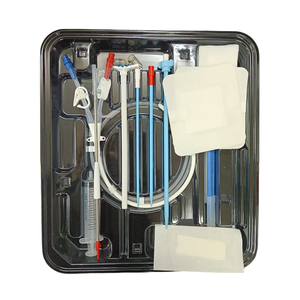
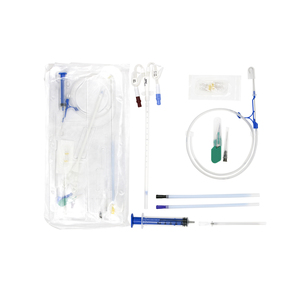
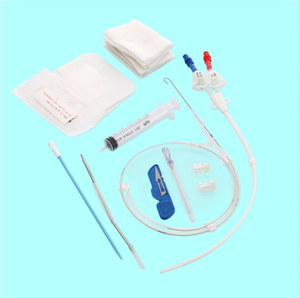
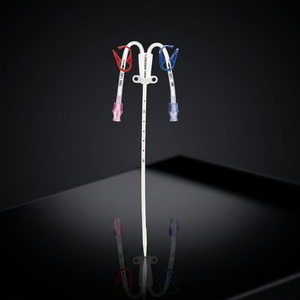
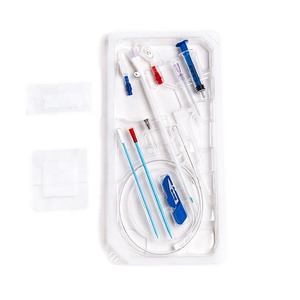
When combined with our sterile vascular access devices—such as our Class III Permanent Silicone Cuffed Hemodialysis Catheter Kits and Short-Term Dual Lumen HD Catheters—our complete product ecosystem offers healthcare providers a single-source solution for invasive therapy and immediate, safe post-procedure disposal.
Localized Application Scenarios in Brazilian Healthcare Facilities
Healthcare delivery in Brazil spans distinct operating environments, each possessing specific requirements for medical consumable durability, bio-waste volume, and regulatory compliance under Workplace Safety Standard NR-32 (Segurança e Saúde no Trabalho em Serviços de Saúde).
Hemodialysis Centers (Clinicas de Nefrite)
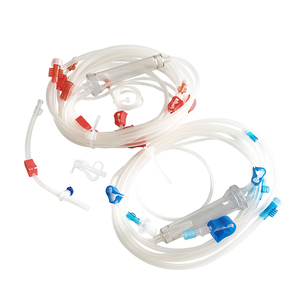
Dialysis units manage heavy volumes of high-gauge AV fistula needles, guidewires, and catheter introduction stylets. Our high-capacity 7L to 13L sharps collectors combined with transparent silicone HD catheters ensure immediate bedside containment, preventing cross-contamination in busy dialysis chairs.
Intensive Care Units (UTI Adulto e Pediátrica)
In high-pressure ICU environments, clinical teams frequently place Central Venous Catheters (CVC) and perform arterial blood sampling. Compact 1L to 3L point-of-use sharps containers attached to mobile IV poles offer immediate needle drop-in without requiring clinicians to leave the sterile field.
Mobile Emergency Units (SAMU 192)
Ambulances and emergency response teams operate in unpredictable physical conditions. Vibration-proof lockable containers engineered with secondary safety latches ensure zero accidental lid pop-offs during patient transport over uneven city routes.
Founded in 1988 in the industrial hub of G.I.D.C. Vatva, Ahmedabad, Gujarat, Shree Umiya Surgical Pvt. Ltd. (operating under the international export brand Mediplus) has grown into a premier medical disposable manufacturer supplying over 70 countries worldwide. Our vertically integrated infrastructure eliminates third-party component sourcing risks, guaranteeing total lot-to-lot consistency.
Vertical Integration Excellence: From raw polymer resin inspection and medical-grade TPU/Silicone extrusion to cleanroom packaging and Ethylene Oxide (EO) batch sterilization, every single step is conducted under our certified ISO 13485 and ISO 9001 quality management framework.
State-of-the-Art Cleanroom Facilities: Controlled ISO Class 7 and Class 8 cleanrooms equipped with positive pressure differential controls and automated particle counter monitoring.
Sustainable Clean Energy Production: High-capacity rooftop solar panel installations supply renewable energy to our molding presses, lowering the carbon footprint per unit produced.
OEM & Private Label Customization: Full support for Portuguese packaging, localized IFUs (Instruções de Uso), customized barcode structures (GS1 DataMatrix), and buyer-specified outer carton branding.
Export Logistics Expertise: Direct vessel shipments from Mundra Port and Nhava Sheva (JNPT) with optimized container stuffing plans that reduce landed ocean freight cost per unit for Mercosur destinations.
Frequently Asked Questions (FAQ) - Sourcing & Export to Brazil
Common questions answered by our Regulatory Affairs & International Trade Desk for Brazilian hospital buyers, medical device distributors, and tender agents.
How does Mediplus assist Brazilian distributors with ANVISA product registration?
We supply a complete regulatory dossier including ISO 13485:2016 certificates, CE Mark technical files, Free Sale Certificates (FSC) apostilled by the embassy, biocompatibility test reports according to ISO 10993 standards, shelf-life stability data, and detailed Portuguese instruction manuals (IFU proofs) to streamline your ANVISA submission.
Are your Sharps Containers compliant with ABNT NBR 13853 standard?
Yes. Our sharps collectors are manufactured using high-puncture-resistant virgin polypropylene resin tested to resist wall perforation forces exceeding 15 Newtons. They feature permanent snap-lock lids, drop-impact structural integrity, and ergonomic needle detachment slots compliant with Brazilian hospital safety standards.
What are the lead times and Minimum Order Quantities (MOQ) for FCL/LCL export to Santos Port?
Standard catalog medical disposables typically require 3 to 4 weeks production time upon order confirmation. Private-label OEM packaging programmes start at a single 20-foot mixed container load. Shipping transit time from Mundra/Nhava Sheva to Santos or Paranaguá port averages 28–35 days.
How is product sterility validated for Class II and Class III hemodialysis catheters?
All sterile single-use devices undergo validated Ethylene Oxide (EO) sterilization in accordance with ISO 11135 standards. Every production cycle is released strictly after chemical indicator verification, biological indicator incubation, and EO residual analysis testing (ISO 10993-7). Batch Certificate of Analysis (CoA) accompanies all shipments.
Do you provide customized OEM packaging with Portuguese labeling and GS1 barcodes?
Yes. Our artwork design department prepares buyer-branded primary pouches, inner boxes, and outer shipper cartons complete with Portuguese regulatory text, Brazilian importer contact details, ANVISA registration numbers, lot codes, expiration dates, and UDI/GS1 DataMatrix barcodes.
What payment terms and trade Incoterms do you offer to Mercosur buyers?
We offer flexible shipping terms including FOB, CFR, and CIF Santos/Paranaguá. Standard payment arrangements include irrevocable Letter of Credit (L/C at sight) or Telegraphic Transfer (T/T). Contact our export desk to discuss credit structures for long-term tender contracts.
Partner with a Globally Recognized Medical Disposables Exporter
Expand your product portfolio in Brazil with ANVISA-ready sharps containers, hemodialysis catheter kits, and vascular access devices built for clinical excellence.