Certified hand protection solutions tailored for hospital networks, tea estates, garment manufacturers, and food processing hubs across Western, Central, and Southern Sri Lanka.
The Democratic Socialist Republic of Sri Lanka represents a strategically unique industrial ecosystem in South Asia. As Sri Lanka advances its export-oriented economy—anchored by apparel manufacturing (BOI zones), Ceylon tea production, seafood processing, rubber chemical handling, and expanding healthcare infrastructure under the Ministry of Health (MOH)—the demand for high-performance, non-allergenic barrier hand protection has surged. Historically reliant on natural rubber latex, Sri Lanka’s domestic industrial and clinical sectors are accelerating a structural transition toward synthetic Nitrile Butadiene Rubber (NBR) gloves.
This shift is driven by three critical factors: the complete elimination of Type I latex allergy risks (proteins causing hypersensitivity), superior chemical resistance against petroleum distillates, oils, and agricultural chemicals, and exceptional puncture resistance required for high-speed manufacturing environments. As a premier international OEM/ODM manufacturer and exporter, our facility leverages over three decades of advanced polymer engineering, ISO Class 7/8 cleanroom production, and certified quality management to supply Sri Lanka’s commercial importers, healthcare distributors, and corporate procurement teams with bespoke disposable and industrial nitrile glove contracts.
SEO & Regulatory Insight for Sri Lankan Importers: All medical-grade nitrile gloves imported into Sri Lanka require clearance and registration with the National Medicines Regulatory Authority (NMRA) under the Ministry of Health. Contracting with an ISO 13485:2016 and CE certified OEM manufacturer guarantees seamless documentation release—including Free Sale Certificates (FSC), Technical Files, and Batch Certificates of Analysis (CoA)—drastically expediting customs clearance at the Port of Colombo.
To maximize operational safety and economic efficiency, OEM glove specifications must align precisely with Sri Lanka's micro-industrial environments. Below is a detailed breakdown of how our optimized nitrile glove formulations serve key sectors across the island:
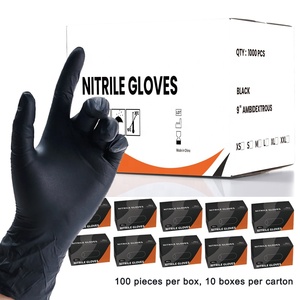
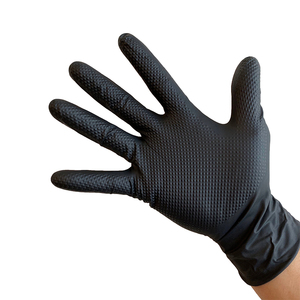
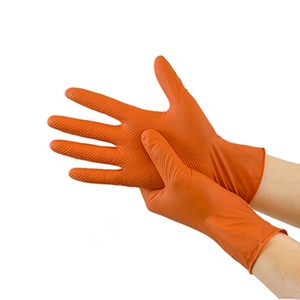
In the Central Highlands (Nuwara Eliya, Kandy, Badulla), workers handle agrochemicals, fertilizers, and copper-based fungicides. Our 6mil to 8mil heavy-duty textured orange and black nitrile gloves provide a high chemical breakthrough threshold, protecting plantation labor while maintaining physical durability against thorny tea bushes.
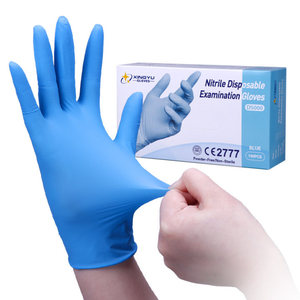
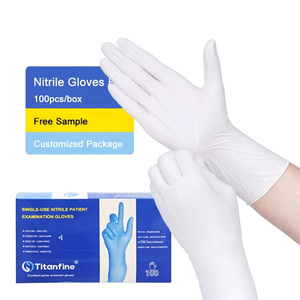
Sri Lanka's premier BOI Export Processing Zones (Katunayake, Biyagama, Seethawaka) demand ultra-tactile sensitivity for fabric inspection, cutting, and garment finishing. Our micro-thin 3mil to 4mil powder-free blue and white nitrile gloves offer 100% silicone-free formulations, preventing fabric staining while protecting workers from industrial dyes and machine lubricants.
Serving government hospital tenders (Colombo National Hospital, Teaching Hospitals) and private hospital chains (Asiri, Lanka Hospitals, Nawaloka). Our medical examination nitrile gloves conform to EN 455 Parts 1-4 and ASTM D6319, featuring AQL 1.5 pinhole standards for viral and bloodborne pathogen protection.
Coastal processing zones in Negombo, Chilaw, and Jaffna export tuna and prawns to EU and US markets. Our US FDA 21 CFR 177.2600 food-contact compliant nitrile gloves ensure zero chemical migration, high tear resistance in low-temperature cold rooms, and enhanced diamond grip for slippery fish handling.
Sri Lanka’s domestic rubber manufacturing sector involves vulcanization, acid coagulants, and chemical compounding. Heavy-duty 8mil diamond textured nitrile gloves provide exceptional mechanical abrasion barrier protection, far outlasting standard latex gloves exposed to chemical solvents.
Driven by Sri Lanka's booming tourism along the Southern Coast (Galle, Mirissa) and Bentota, premium hotels and culinary establishments utilize sleek smooth black nitrile gloves for food presentation, hygiene compliance, and tattoo/spa aesthetics.
Operating in Sri Lanka’s tropical maritime climate (average temperatures of 27°C–32°C and relative humidity levels exceeding 80%) poses severe storage and operational challenges for polymer gloves. Traditional latex deteriorates rapidly when exposed to humidity and ambient ozone, while vinyl lacks the tensile resilience required for physical labor. Below is a empirical performance comparison of our engineered Nitrile gloves against competing materials under tropical conditions:
| Performance Criterion | Mediplus OEM Nitrile Gloves | Natural Rubber Latex | Vinyl (PVC) Gloves |
|---|---|---|---|
| Tropical Storage Stability (Shelf Life) | 5 Years (Resistant to heat & ozone) | 2–3 Years (Degrades under heat/humidity) | 3 Years (Prone to plasticizer migration) |
| Protein Allergy Risk (Type I) | Zero (100% Synthetic NBR) | High (Natural latex proteins) | Zero (Synthetic PVC) |
| Puncture & Abrasion Resistance | Exceptional (3x–5x higher than latex) | Moderate | Low (Easily tears under stress) |
| Chemical Barrier (Oils, Solvent, Acid) | High Resistance (EN ISO 374-1) | Poor against petroleum/oils | Low chemical resistance |
| Tactile Sensitivity & Ergonomics | High (Thermosensitive fit to hand) | Very High | Rigid / Poor stretch fitting |
| Sri Lanka NMRA & Import Compliance | Fully Documented (CE, ISO 13485) | Varies by regional supplier | Limited medical approvals |
As Sri Lankan corporate buyers and Ministry procurement officers modernize their supply chains, strategic sourcing strategies are shifting toward sustainable, high-efficiency supplier partnerships. Key trends shaping the Sri Lankan glove import market include:
Founded in 1988, our parent manufacturing enterprise—Shree Umiya Surgical Pvt. Ltd. (SUSPL / Mediplus)—combines 36+ years of specialized disposable medical and industrial device production. Spanning vertically integrated cleanroom facilities, our factory delivers uncompromised quality assurance for high-volume B2B importers across 70+ countries.
Our production facilities operate ISO Class 7 and Class 8 controlled cleanrooms equipped with automated dipping lines, continuous particle monitoring, and differential pressure controls. This guarantees ultra-low bioburden levels for clinical examination and cleanroom nitrile gloves.
Every export batch undergoes rigorous quality control testing—including pinhole water-tightness (AQL 1.0/1.5), tensile strength testing (≥14 MPa post-aging), and elongation at break (≥500%). For sterile surgical/exam variants, Ethylene Oxide (EO) and Gamma irradiation cycles are fully validated with biological indicator release dossiers.
We eliminate import administrative bottlenecks by supplying complete regulatory dossiers: ISO 13485:2016 certificates, EU MDR CE certification, Biocompatibility summaries (ISO 10993), Free Sale Certificates (FSC), and legalized Certificate of Origin documents required for Sri Lanka Customs clearance under HS Code 4015.19.
We transform your brand vision into market-ready products. From custom inner dispenser boxes (100-count or bulk 200-count) and master shipping cartons to custom surface texturing (smooth, micro-textured fingertips, or 8mil diamond grip), our in-house graphics team provides artwork proofing within 5–7 working days.
We make contract manufacturing seamless for Sri Lankan distributors, regional wholesalers, and hospital supply agencies. Here is how our OEM partner workflow functions:
Addressing core commercial, regulatory, and technical inquiries raised by procurement officers in Colombo, Kandy, Galle, and Jaffna:
To clear medical gloves through Sri Lanka Customs and obtain NMRA clearance, importers require an ISO 13485:2016 Quality Management Certificate, EU CE Certificate, Certificate of Free Sale (FSC), Commercial Invoice, Packing List, Bill of Lading, and a Batch-specific Certificate of Analysis (CoA). Our dedicated export desk provides all documentation pre-stamped and apostilled if necessary.
We fully accommodate standard international trade financing aligned with Central Bank of Sri Lanka guidelines. We accept 100% Irrevocable Commercial Letters of Credit (L/C at sight) from top-tier Sri Lankan commercial banks (Commercial Bank of Ceylon, Hatton National Bank, Sampath Bank, Bank of Ceylon) as well as Telegraphic Transfer (T/T) deposit terms.
Our nitrile gloves are manufactured using 100% premium synthetic Acrylonitrile Butadiene Rubber (NBR) compounded with anti-aging stabilizers. Unlike natural rubber latex, nitrile is inherently immune to ozone degradation and high thermal fluctuations. When stored in sealed inner dispenser boxes inside dry warehouse conditions (below 35°C), our gloves maintain full tensile strength and elasticity for 5 years.
For standard catalogue items under our brand, MOQs start at 1 pallet per SKU. For custom OEM private-label packaging (printed inner boxes and master cartons), our standard MOQ is a single 20-foot FCL container mix (approx. 35,000 to 40,000 inner boxes / 3.5 to 4 million gloves), allowing you to mix sizes (S, M, L, XL) within one shipment.
Standard production lead time for catalogue orders is 3 to 4 weeks upon order confirmation. New OEM private-label orders take approximately 4 to 5 weeks from artwork approval. Ocean transit time from our primary export ports (Mundra or Nhava Sheva) to Colombo is fast—typically taking only 4 to 7 direct sailing days.
Yes. We supply heavy-duty 6mil and 8mil industrial nitrile gloves featuring raised diamond texturing. These models comply with EN ISO 374-1 chemical permeation standards, providing robust protection against agricultural pesticides, fertilizers, diesel, and industrial acids utilized in Sri Lankan estate management.
Whether you are submitting a government medical tender, supplying tea estate regional federations, or distributing to BOI garment manufacturing plants in Sri Lanka, our technical team is ready to deliver factory-direct pricing, custom samples, and complete regulatory dossiers.