
Engineered in ISO Class 7/8 cleanrooms to meet stringent Japanese hospital standards and international regulatory benchmarks.
An in-depth technical analysis for Japanese medical device importers, hospital procurement boards, and homecare distributors.
As Japan navigates its status as a super-aged society—where over 29.1% of the population is aged 65 or older—the demand for high-reliability, ultra-comfortable respiratory consumables has reached unprecedented levels. Modern Japanese healthcare paradigms are rapidly shifting from acute inpatient stays toward home medical care (在宅医療 - Zaitaku Iryō). In this landscape, Home Oxygen Therapy (HOT - 在宅酸素療法) forms a cornerstone of long-term management for Chronic Obstructive Pulmonary Disease (COPD), interstitial lung disease, and post-acute cardiac conditions.
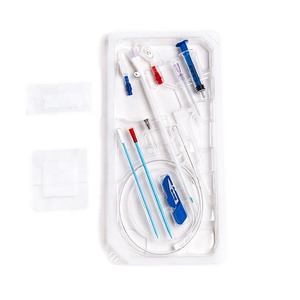
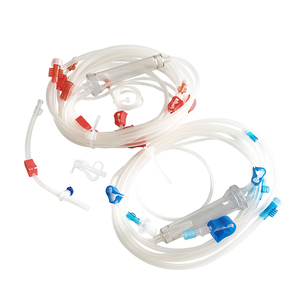
Mediplus (Shree Umiya Surgical Pvt. Ltd.), established in 1988, provides vertically integrated manufacturing solutions that directly address the demanding quality thresholds set by Japan's Pharmaceuticals and Medical Devices Agency (PMDA) under the Pharmaceutical and Medical Devices Act (PMD Act). By combining ISO Class 7/8 cleanroom production with precision micro-extrusion technology, Mediplus delivers nasal cannulas and vascular access disposables that bridge top-tier clinical performance with cost-effective procurement for Japanese medical wholesalers.
Comparing standard commercial nasal cannulas against Mediplus Medical-Grade Soft-Silicone & Star-Lumen Series.
| Technical Parameters | Standard Commercial Cannulas | Mediplus Soft-Touch Series (Japan Spec) | Clinical & Compliance Advantage |
|---|---|---|---|
| Nasal Prong Hardness | Shore A 75 (Rigid PVC) | Shore A 50–55 (Ultra-Soft TPU/Silicone Blend) | Prevents septum ulceration & skin breakdown in long-term geriatric HOT patients. |
| Tubing Interior Profile | Smooth Smooth-Bore Tubing | 6-Channel Star Lumen (Kink-Resistant) | Guarantees continuous oxygen flow even when bent or compressed under bed linens. |
| Phthalate / Chemical Safety | Standard Plasticized PVC | 100% DEHP-Free, Latex-Free, Bio-Compatible | Meets PMDA & ISO 10993 cytotoxicity and systemic toxicity safety requirements. |
| Acoustic / Flow Noise | Standard Turbulence (>35 dB at 5L/min) | Laminar Micro-Diffuser Geometry (<22 dB) | Ensures patient comfort and rest during nocturnal oxygen administration. |
| Connector Type | Basic Friction Fit | Universal Soft Funnel / Threaded Luer Lock | Seamless fit with Japanese concentrators (Teijin, Fukuda Denshi, Nidek compatibility). |
Tailored nasal cannula configurations designed to serve specific Japanese healthcare delivery environments.
In Japanese homecare, patients wear nasal cannulas up to 24 hours daily. Mediplus curved, anatomical soft-prong designs minimize pressure on the upper lip and columella, preventing tissue necrosis and improving long-term therapy compliance for elderly patients managed by visiting nurse stations (訪問看護ステーション).
Japanese tertiary hospitals require high-flow capable cannulas with star-lumen anti-crush tubing for rapid oxygenation in emergency departments and ICUs. Mediplus supplies sterile, individual peel-pack cannulas that maintain high flow velocity without dislodging during patient repositioning.
Long-term care facilities in Tokyo, Osaka, and Nagoya prioritize ease of use and skin safety. Color-coded sizing and adjustable slide sleeves allow care staff to quickly secure cannulas safely on frail individuals with minimal training requirement.
Understanding regulatory shifts, sustainability goals, and supply chain strategies in the Japanese healthcare sector.
Japan's Ministry of Health, Labour and Welfare (MHLW) and PMDA demand exhaustive technical validation dossiers from overseas suppliers. Foreign medical device manufacturers must hold ISO 13485 certification and provide STED-compliant batch release records, bio-burden testing, and Ethylene Oxide (EO) residue limits below 1 ppm. Importers in Japan increasingly favor established manufacturers like Mediplus that possess proven export infrastructure and full raw-material lot traceability.
In alignment with Japan's Green Procurement strategies and plastic waste management initiatives, medical institutions actively seek suppliers offering minimal secondary packaging footprint, recyclable outer cartons, and non-toxic materials. Mediplus utilizes eco-optimized box packaging and cleanroom solar-powered production lines to help Japanese partners hit corporate sustainability targets.
Over three decades of precision engineering, cleanroom manufacturing, and global regulatory mastery.
Shree Umiya Surgical Pvt. Ltd. (SUSPL), operating globally under the Mediplus brand, has been a trusted pioneer in single-use medical disposable devices since 1988. Situated in the industrial hub of Vatva, Ahmedabad, India, our state-of-the-art production complex integrates granule-to-sterilization manufacturing under one unified quality management system.
All micro-injection moulding, extrusion, assembly, and primary packaging take place in environmentally controlled cleanrooms with continuous positive pressure and airborne particle monitoring.
In-house Ethylene Oxide (EO) sterilization chambers operated under strict ISO 11135 guidelines. Every batch is released against chemical/biological indicators and bio-burden tests.
Full OEM support including buyer-specified Japanese artwork, barcode/UDI integration, custom tubing lengths, and registration document preparation for overseas MOH/PMDA submissions.
Clear, definitive responses regarding regulatory compliance, MOQ, shipping logistics, and quality validation.
Contact our dedicated export team today for technical specifications, product samples, OEM consultation, and FOB/CIF price quotes for the Japanese market.