
Explore medical-grade guide wire delivery systems and single-use vascular access kits engineered in ISO 13485 cleanroom facilities. Validated for high torqueability, pushability, and biocompatibility under EU MDR pathways.
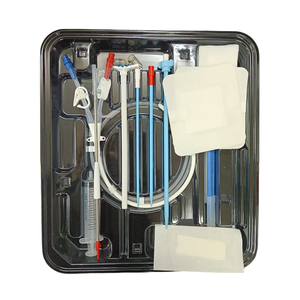
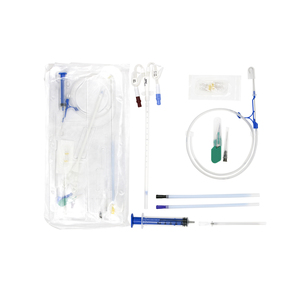
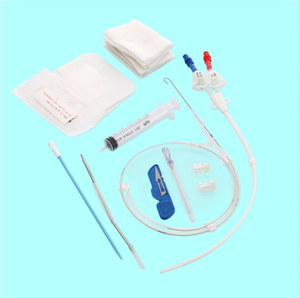
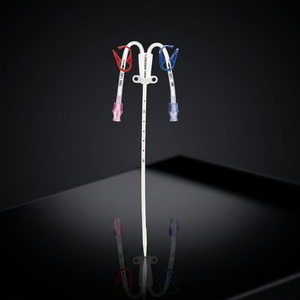
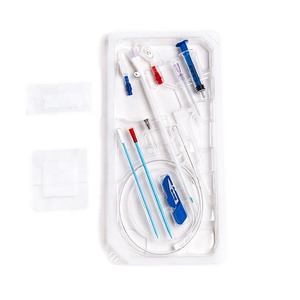
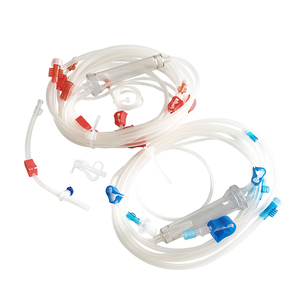
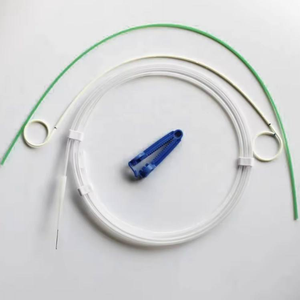
In modern interventional medicine, vascular access, and nephrology procedures, the medical guide wire is the foundational navigation tool. Whether performing central venous catheterization (CVC), long-term tunneled hemodialysis placement, or peripheral angioplasty, clinical safety relies on the structural integrity, pushability, torque transmission, and tactile responsiveness of the guide wire. Sourcing from certified guide wire factories is no longer merely a commercial decision; it is a critical risk-management mandate for hospital procurement boards, OEM device brands, and medical tender distributors worldwide.
As a leading Indian medical disposables manufacturer—operating under Shree Umiya Surgical Pvt. Ltd. (Mediplus India) in Vatva, Ahmedabad—our facilities have specialized in medical polymer extrusion, centerless wire grinding, surface coating, and cleanroom assembly since 1988. Understanding the core technical parameters that distinguish top-tier guide wire manufacturing plants from low-cost assembly workshops is vital for global B2B buyers.
Top trusted guide wire factories maintain complete control over raw material intake, wire drawing, core grinding, polymer jacketing, coating application, and sterile packaging. Outsourcing core wire grinding or coil winding introduces mechanical variance between batches, increasing the risk of wire flaking, tip detachment, or vascular wall perforation. Operating dedicated ISO Class 7 and Class 8 cleanrooms with positive differential pressure guarantees bioburden counts remain strictly within international ISO 11607 and ISO 13485 standards prior to Ethylene Oxide (EO) sterilization.
Information Gain Metric: Quality guide wire factories maintain a 1:1 torque transmission ratio, ensuring 360-degree proximal rotation translates precisely to distal tip orientation within tortuous vascular anatomy.
Superelastic Nitinol (Nickel-Titanium alloy) provides kink resistance and elastic shape-memory, whereas Stainless Steel (SS304V) delivers maximum pushability and flexural rigidity for heavy catheter tracking.
Crosslinked Polyvinylpyrrolidone (PVP) hydrophilic coatings reduce insertion coefficient of friction by up to 90%, while PTFE fluoropolymer coatings offer smooth dry lubricity and non-stick sheath passage.
Gold and Platinum-Iridium coil tips combined with micro-tungsten polyurethane jackets ensure sharp visibility under fluoroscopic guidance during Seldinger procedure entry.
When specifying medical guide wires for custom OEM hemodialysis catheter kits, central venous line sets, or urology access kits, procurement officers must match mechanical characteristics with clinical intent. Below is the technical specification breakdown standard in top-tier guide wire manufacturing factories:
| Wire Diameter (Inch / mm) | Core Metallurgy | Coating / Jacket Type | Tip Configuration | Tensile Strength (N) | Clinical Target Application |
|---|---|---|---|---|---|
| 0.018" (0.46 mm) | Nitinol Superelastic Core | Hydrophilic Crosslinked PVP | Straight / 1.5mm Angled | > 15 N | Micro-puncture access, peripheral arterial interventional procedures |
| 0.025" (0.64 mm) | 304V Stainless Steel | PTFE Fluoropolymer Spray | J-Tip (3mm Radius) | > 25 N | Pediatric central venous access, small-bore hemodialysis catheters |
| 0.032" (0.81 mm) | Nitinol Core / Gold Marker | Polyurethane Radiopaque | J-Tip with Memory Core | > 35 N | Adult CVC placement, short-term double lumen hemodialysis catheters |
| 0.035" (0.89 mm) | High-Tensile SS316L Core | PTFE Coated / Uncoated | Standard J-Tip (3mm & 6mm) | > 45 N | Seldinger access, 12Fr - 15Fr permanent tunneled dialysis catheter placement |
| 0.038" (0.97 mm) | Nitinol / Stainless Hybrid | Hydrophilic / Silicone Coated | Straight & J-Tip Combo | > 50 N | High-flow long-term silicone vascular access & urological stent delivery |
The global medical device market is undergoing structural realignments driven by regulatory updates, geopolitical supply-chain diversification, and cost-containment pressures in hospital purchasing networks. Key procurement trends shaping the future of guide wire sourcing include:
Global medical supply chains are transitioning from reliance on single-country production toward qualified medical engineering hubs in India. Manufacturers in India, such as Mediplus India (Shree Umiya Surgical Pvt. Ltd.), offer US FDA-listed, ISO 13485-compliant, and CE-marked device lines at competitive landed costs. This shift enables hospital chains and private-label brand owners to build supply chain resilience without sacrificing biocompatibility or clinical performance.
The transition from EU MDD to the stringent EU MDR pathway has disqualified many smaller factories lacking technical documentation infrastructure. Top trusted guide wire factories now supply comprehensive Technical Files, ISO 10993 biocompatibility summaries (cytotoxicity, sensitization, systemic toxicity), and full Unique Device Identification (UDI) laser marking and barcode compliance. Buyers increasingly favor suppliers capable of supporting regulatory submissions directly with local Ministries of Health across 70+ export territories.
Rather than procuring guide wires, dilators, scalpel blades, and catheters from separate vendors, major distributors favor single-source OEM procedure kits. Integrated manufacturing reduces assembly hand-offs, ensures 100% component fit compatibility (e.g., verifying guide wire outer diameter against dilator inner lumen clearance), and simplifies batch release sterilization validation under a single Certificate of Analysis (CoA).
As interventional procedure techniques evolve toward minimally invasive approaches, guide wire technology is advancing along four primary technical vectors:
Next-generation hydrophilic polymer matrices eliminate microscopic particulate shedding during prolonged fluoroscopic manipulation, significantly reducing embolization risks in microvascular beds.
Advanced laser micro-grooving along the distal tip enhances sound-wave reflection under real-time ultrasound navigation, allowing accurate venipuncture without high radiation exposure.
Micro-coiling machines continuously adjust coil pitch along the shaft, delivering ultra-soft atraumatic tip flexibility combined with high column strength at the proximal pushing end.
Established in 1988 at Plot No. 4002, G.I.D.C., Phase-IV, Vatva, Ahmedabad, Gujarat, India, Shree Umiya Surgical Pvt. Ltd. (Mediplus) has built a 36-year legacy as a high-precision manufacturer and exporter of single-use medical disposables across renal care, central venous access, infusion therapy, urology, anesthesia, and surgery.
Answers to common technical, quality control, and regulatory questions raised by hospital procurement officers, tender agents, and medical brand owners.
Connect with our technical export engineering team to request sample evaluation kits, detailed technical dossiers, OEM private-label quotations, or factory audit schedules.
Inquire Now