
Precision-Engineered Medical Disposables Manufactured Under ISO 13485 & CE Quality Management Standards
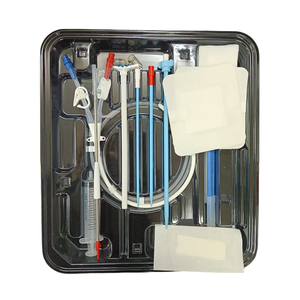
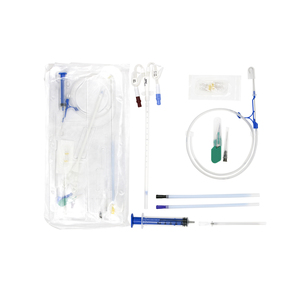
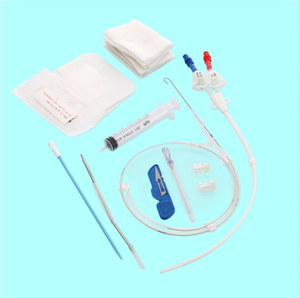
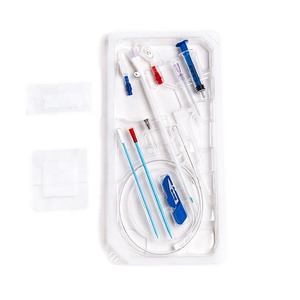
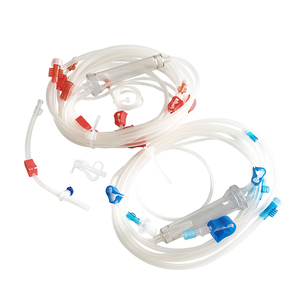
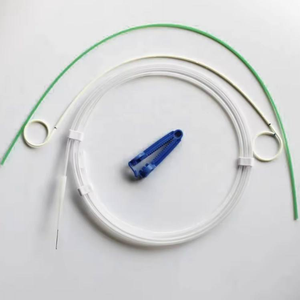
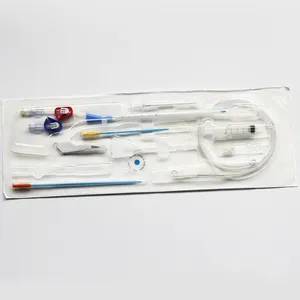
The global demand for high-grade urological and vascular catheterization devices has undergone a structural shift. As healthcare systems globally enforce stricter infection control protocols to mitigate Catheter-Associated Urinary Tract Infections (CAUTI) and central line-associated bloodstream infections (CLABSI), procurement directors, hospital administrators, and medical device distributors are increasingly re-evaluating their supply chain partnerships. Selecting a qualified China Foley Catheter Factory & Supplier is no longer merely a decision based on unit cost; it is a strategic alignment involving regulatory compliance, advanced polymer chemistry, automated manufacturing consistency, and end-to-end quality assurance.
China's medical disposable manufacturing ecosystem has evolved from high-volume standardized output into a sophisticated hub of precision bio-material engineering. Leading Chinese facilities operate under strict ISO 13485 Quality Management Systems (QMS), utilizing ISO Class 7 and Class 8 cleanrooms equipped with real-time particle monitoring, high-precision extrusion machinery, and fully automated packaging lines. For international importers and group purchasing organizations (GPOs), establishing direct manufacturing ties with premier Chinese OEM/ODM suppliers provides a sustainable competitive edge—balancing cost optimization with uncompromising clinical efficacy.
Transition from natural rubber latex to 100% biocompatible medical silicone and micro-thin hydrophilic coatings to eliminate tissue trauma and latex hypersensitivity.
Incorporation of silver ion antimicrobial agents, smooth atraumatic drainage eyes, and uniform balloon symmetry to inhibit bacterial biofilm formation.
Full alignment with EU MDR (2017/745), US FDA 510(k) listings, ISO 10993 biocompatibility testing, and complete UDI barcode traceability.
A standard Foley catheter is a critical invasive medical device designed for continuous urinary drainage. However, the engineering dynamics involved in its design directly impact patient comfort, catheterization duration, and complication rates. Understanding the material science behind catheter construction is essential for procurement professionals seeking top-tier hospital supplies.
Historically, latex catheters coated with silicone resin served as the industry benchmark due to low material costs and high flexibility. However, cytotoxic reactions, tissue toxicity, and latex allergies have accelerated the shift toward 100% Liquid Silicone Rubber (LSR) and Thermoplastic Polyurethane (TPU) devices.
| Technical Parameter | Silicone-Coated Latex | 100% All-Silicone Catheter | Medical TPU (Polyurethane) |
|---|---|---|---|
| Biocompatibility | Moderate (Risk of latex allergy) | Superior (Inert, non-cytotoxic) | High (Thermoplastic flexibility) |
| Indwelling Duration | Short-term (< 7 Days) | Long-term (Up to 30 Days) | Medium to Long-term (> 14 Days) |
| Lumen Diameter / Flow Rate | Thicker walls, smaller lumen | Thin walls, larger inner lumen (+20% flow) | Optimal wall ratio, maximized flow |
| Encrustation Resistance | Low to Moderate | High (Smooth non-porous wall) | Very High (Hydrophilic modified) |
| Balloon Symmetry | Variable elastic memory | High precision concentric expansion | Rigid high-burst pressure retention |
One of the primary causes of involuntary catheter extraction and bladder neck trauma is balloon asymmetry or structural deflation. Leading Chinese OEMs utilize fully automated liquid silicone injection moulding to guarantee 100% balloon concentricity. The balloon wall thickness is controlled down to micro-tolerances (+/- 0.02mm), ensuring that upon inflation with sterile water, the balloon expands uniformly without tilting the catheter tip against the sensitive mucosal lining of the bladder.
Drainage eyelets must be formed using precision heat-polishing techniques rather than mechanical punching. Mechanical punching leaves microscopic burrs that scratch urethral tissues during insertion and withdrawal. Heat-polished atraumatic eyes yield completely smooth, rounded bevels. Furthermore, the embedding of a continuous radiopaque line (composed of barium sulfate) along the catheter body allows clear X-ray and fluoroscopic visualization to verify anatomical positioning post-catheterization.
As global healthcare expenditures lean heavily toward outcome-based medicine, procurement teams must anticipate technological shifts over the next 3 to 5 years. Direct sourcing partners in China are pioneering several key technological advances that are transforming catheter design and functional performance:
Hydrophilic-coated catheters absorb and retain water molecules, creating an ultra-slick, low-friction surface layer (coefficient of friction < 0.05). This eliminates the need for manual gel lubrication prior to insertion, dramatically reducing urethral trauma, insertion pain, and initial microbial introduction. Future hospital procurement guidelines across Europe and North America are rapidly establishing hydrophilic technology as the mandatory standard for acute care settings.
The convergence of medical disposables and digital health has birthed "smart catheters." Designed with miniaturized core-temperature sensors and optical urine flow monitors, these catheters provide real-time telemetry to Intensive Care Unit (ICU) central monitoring stations. Chinese R&D centers are currently co-developing smart Foley and hemodialysis catheters that alert clinical staff at the earliest signs of acute kidney injury (AKI) or systemic inflammatory response syndrome (SIRS).
Bacterial colonization on catheter surfaces leads to bio-encrustation and severe urinary tract infections. Advanced catheter factories are integrating silver nanoparticle complexes and slow-release nitric oxide donor compounds into the silicone polymer matrix. These bioactive coatings actively disrupt bacterial cell membranes and prevent Proteus mirabilis and E. coli adhesion without inducing systemic antibiotic resistance.
Under the EU MDR and US FDA regulations, full product lifecycle traceability is non-negotiable. Leading Chinese suppliers have transitioned to smart factories operating under Industry 4.0 paradigms. Automated visual inspection systems utilize high-resolution AI vision cameras to inspect 100% of manufactured catheters for surface flaws, eyelet integrity, and balloon symmetry. Laser-etched Unique Device Identification (UDI) codes are applied directly to individual blister packaging, ensuring flawless recall management and inventory tracking.
Evaluating a Chinese manufacturer requires verifying their operational infrastructure, quality management systems, and international certification compliance. True enterprise-level suppliers possess comprehensive vertical integration—from raw polymer synthesis and injection moulding to cleanroom assembly, sterilization validation, and direct export logistics.
Catheter assembly must occur within strictly controlled environmental conditions to keep bioburden levels well below regulatory thresholds. State-of-the-art facilities feature:
Sterilization integrity is verified through rigorous validation protocols matching ISO 11135 (for Ethylene Oxide) and ISO 11137 (for Gamma Irradiation). Every export batch is released accompanied by a Certificate of Analysis (CoA), physical biological indicator test results, and residual EO gas analysis (guaranteeing EO residual levels below 4 ppm as per ISO 10993-7 guidelines).
To assist global buyers, procurement committees, and tender distributors in selecting a compliant and reliable China Foley Catheter supplier, we have synthesized a strategic qualification matrix:
| Audit Dimension | Critical Verification Criteria | Required Documentation / Compliance |
|---|---|---|
| Quality Certifications | Comprehensive QMS covering catheter extrusion, assembly, and packaging. | ISO 13485:2016, ISO 9001:2015 certificates issued by accredited Notified Bodies (TÜV, SGS, BSI). |
| Regulatory Dossiers | Product registration technical files compliant with target market health authorities. | EU MDR CE Mark, US FDA 510(k), Free Sale Certificate (FSC), Declaration of Conformity. |
| Biocompatibility Testing | Full spectrum biological safety evaluation of tissue-contacting polymers. | ISO 10993 reports: Cytotoxicity, Sensitization, Intracutaneous Reactivity, Systemic Toxicity. |
| Physical & Mechanical QC | Empirical testing of balloon burst pressure, tensile joint strength, and flow rate. | In-house & 3rd-party lab test reports matching EN ISO 20696 (Sterile Urethral Catheters). |
| Private Label OEM Scope | Custom artwork, multilingual Instructions for Use (IFU), UDI barcode creation. | Complete packaging artwork proofing within 5-7 working days; custom carton dimensioning. |
Technical, Regulatory, and Procurement Directives Answered by Our Engineering Team
Empower your medical supply network with certified quality, competitive direct-factory pricing, and robust regulatory support. Contact our export desk today to request product samples, technical data sheets, and comprehensive quotation packages.