Global Medical Tubing Market Dynamics & Semantic Intent Mining
The global medical tubing market is undergoing a structural paradigm shift driven by advancing minimally invasive surgical techniques, an expanding global geriatric demographic, and stricter international regulatory frameworks governing biocompatibility and patient safety. Medical tubing serves as the structural backbone for critical clinical interventions, encompassing long-term hemodialysis, cardiovascular access, continuous intravenous therapy, airway management, and post-operative drainage systems.
For procurement executives, hospital purchasing consortia, and OEM medical device brand managers, qualifying a Top 10 Medical Tubing Manufacturer & Exporter requires a deep semantic understanding of raw material polymer dynamics, extrusion tolerances, cleanroom environmental controls, and regulatory dossier compliance under EU MDR (2017/745) and US FDA guidelines. Modern healthcare demands single-use tubing solutions that offer supreme kink-resistance, precise lumen dimensions, biocompatible surface treatments, and total absence of harmful plasticizers such as DEHP or phthalates.
Information Gain Insight: The medical tubing manufacturing landscape is moving rapidly from traditional mono-extrusion single-lumen PVC to complex multi-lumen co-extrusion utilizing Thermoplastic Polyurethanes (TPU) and Liquid Silicone Rubber (LSR). OEM procurement teams must prioritize suppliers capable of delivering tight dimensional tolerances (±0.005mm) alongside integrated radiopaque stripes for accurate fluoroscopic visualization during catheter insertion.
Material Science Whitepaper: Polymer Matrix Comparison
Selecting the optimal polymer formulation is the single most decisive factor in medical tubing design. Each clinical application demands specific mechanical properties, flexural modulus, biostability, and sterilization compatibility. Below is an authoritative comparative evaluation of primary medical-grade polymers utilized by leading manufacturers:
| Polymer Type |
Key Mechanical & Chemical Attributes |
Biocompatibility & Standards |
Primary Clinical Applications |
Sterilization Compatibility |
| Thermoplastic Polyurethane (TPU) |
High tensile strength, exceptional blood softening property (thermo-sensitivity), superior kink resistance, high burst pressure resistance. |
ISO 10993, USP Class VI, Phthalate-free, non-hemolytic. |
Hemodialysis catheters, Central Venous Catheters (CVC), PICC lines, arterial lines. |
Ethylene Oxide (EO), Gamma Irradiation, E-beam. |
| Medical Grade Silicone (LSR / HCR) |
Extreme flexibility, superior thermal stability, permanent elasticity, low surface tackiness, long-term tissue inertness. |
ISO 10993-5 (Cytotoxicity compliant), USP Class VI, zero cytotoxic leaching. |
Long-term tunneled dialysis catheters, urinary Foley catheters, wound drainage, peristaltic pumps. |
Autoclave (Steam), EO Gas, Gamma. |
| DEHP-Free Medical PVC |
High transparency, cost-effective, adjustable shore hardness (Shore A 50-95), kink-resistant formulation options. |
REACH & RoHS compliant, Non-DEHP plasticized (TOTM / DINCH). |
IV infusion sets, blood transfusion lines, respiratory masks, suction connecting tubing. |
Ethylene Oxide (EO), Radiation. |
| Fluoropolymers (PTFE / FEP / PFA) |
Ultra-low coefficient of friction, high temperature tolerance, chemical inertness, high dielectric strength. |
USP Class VI, Biologically inert, hydrophobic surface properties. |
Endoscopic working channels, vascular guide wire jackets, micro-catheter liners. |
Autoclave, Dry Heat, EO. |
Precision Manufacturing & Cleanroom Extrusion Engineering
Top-tier medical tubing production demands ultra-clean environmental conditions and state-of-the-art extrusion technologies. Raw material granules are processed through multi-screw extruders operating under closed-loop laser measurement systems that monitor outer diameter (OD), inner diameter (ID), wall thickness, and concentricity in real time.
1. Micro-Bure Multi-Lumen Co-Extrusion
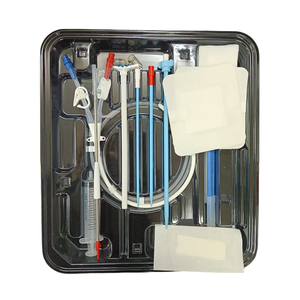
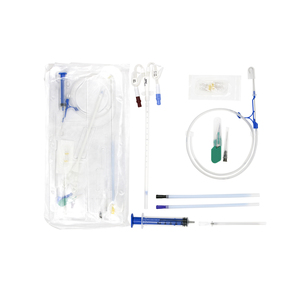
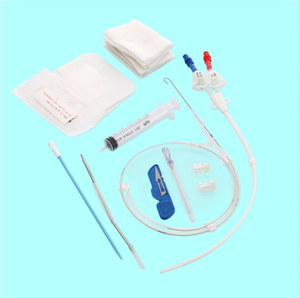
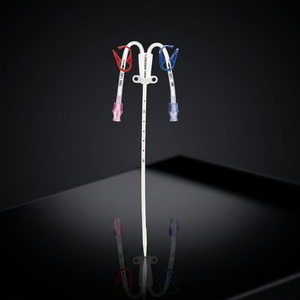
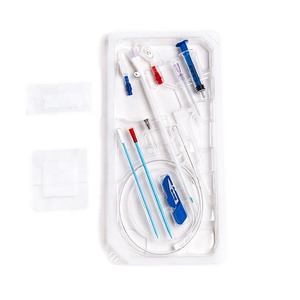
Advanced vascular access devices, such as double-lumen and triple-lumen hemodialysis catheters, require precise fluid separation to prevent arterial and venous blood re-circulation. Modern extrusion heads allow the simultaneous extrusion of multiple lumens alongside radiopaque barium sulfate (BaSO4) stripes embedded directly within the catheter wall, eliminating the risk of surface stripe delamination while ensuring maximum visibility under continuous X-ray guidance.
2. Controlled Cleanroom Environment (ISO Class 7 & 8)
To prevent particulate contamination, microbial bioburden, and pyrogen build-up, all secondary processing operations—including lumen tip forming, soft-curved tip welding, side-hole punching, silicone cuff attachment, and printing of centimeter depth markers—are conducted within certified ISO Class 7 and Class 8 cleanrooms. Airborne particulate counts, temperature, relative humidity, and differential air pressures are monitored continuously in accordance with ISO 14644-1 standards.
Future Procurement Trends in the Medical Tubing Sector
As global healthcare systems expand surgical throughput while seeking cost containment, procurement managers must anticipate several major macro trends shaping the medical tubing industry over the coming decade:
- Transition to Bio-Resorbable and Antimicrobial Polymers: To suppress Catheter-Associated Urinary Tract Infections (CAUTI) and Central Line-Associated Bloodstream Infections (CLABSI), medical tubing manufacturers are embedding silver nanoparticle complexes and chlorhexidine agents directly into the polymer matrix.
- Zero-Phthalate & Eco-Friendly Materials: Global regulatory bodies, led by the European Chemicals Agency (ECHA) and US FDA, are accelerating mandatory bans on traditional phthalate plasticizers (DEHP/DOP). Manufacturers are pivoting toward sustainable, recyclable TPE and TOTM-plasticized formulations.
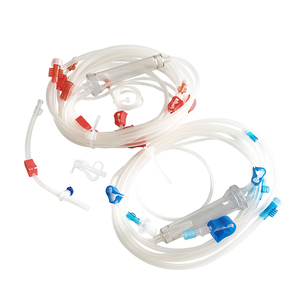
- Smart Tubing with Embedded Sensor Tech: Next-generation tubing sets for extracorporeal blood circuits are integrating micro-fluidic sensors to monitor blood temperature, flow velocity, bubble formation, and inline pH levels without invasive fluid contact.
- Nearshoring and Diversified OEM Supply Chains: Hospital purchasing groups are reducing reliance on single-region manufacturing hubs, favoring established high-volume production facilities in India that offer European-grade quality management at highly competitive landed costs.
Enterprise Profile: Mediplus (Shree Umiya Surgical Pvt. Ltd.)
Established in 1988 in Ahmedabad, India, Shree Umiya Surgical Pvt. Ltd. (Mediplus) has evolved into one of the world's premier manufacturers and exporters of single-use medical disposables and vascular access catheter systems. Spanning over three decades of engineering innovation, Mediplus operates a fully vertically integrated production facility located in the G.I.D.C. industrial estate of Vatva.
Vertically Integrated Manufacturing
From polymer compounding, injection molding, and precision extrusion to cleanroom assembly and automated packaging, Mediplus controls 100% of the manufacturing chain to guarantee zero lot-to-lot variance.
Rigorous Quality Certification
Operates under ISO 13485:2016 and ISO 9001 quality management systems. Product families hold full CE marking under the EU MDR regulatory pathway, accompanied by full biocompatibility dossiers (ISO 10993).
Global Footprint (70+ Countries)
Mediplus medical devices are trusted by health authorities, hospital networks, and tender procurement agents across Europe, the Middle East, Latin America, Africa, and Asia-Pacific.
Turnkey OEM & Private Label
Complete custom design support including client-branded artwork, customized inner pouch layout, multi-lingual IFU insertion, UDI barcode printing, and fast-track regulatory technical file transfer.
Validated Sterilization Assurance
In-house and validated Ethylene Oxide (EO) sterilization cycles released strictly against biological/chemical indicators, bioburden testing, and residual EO gas limits below 4 ppm.
Sustainable Solar-Powered Facility
Empowered by rooftop industrial solar generation, reducing the carbon intensity per manufactured unit while assuring uninterrupted cleanroom power stability during high-volume production runs.
Top 10 Evaluation Criteria for Global Procurement Managers
When conducting supplier audits for medical tubing and catheter assemblies, international procurement committees evaluate manufacturers against ten essential operational benchmarks:
- ISO 13485:2016 Scope & Validity: Verification that certified QMS explicitly covers design, extrusion, assembly, and sterilization of sterile single-use medical devices.
- Raw Material Traceability: Complete lot-by-lot traceability extending from raw resin supplier Certificate of Analysis (CoA) to the packaged final medical device.
- Dimensional Accuracy & Cpk Capabilities: Automated 2-axis optical micrometer measurement during extrusion, demonstrating high process capability (Cpk > 1.33).
- Biocompatibility Compliance: Full testing portfolio according to ISO 10993 (Cytotoxicity, Sensitization, Intracutaneous Reactivity, Hemocompatibility, Acute Systemic Toxicity).
- Cleanroom Validation Standards: Environmental monitoring records for microbial air counts (< 100 CFU/m³) and surface bioburden within ISO Class 7/8 zones.
- Sterilization Validation Dossier: Compliance with ISO 11135 (for EO) or ISO 11137 (for Gamma), including half-cycle validation and EO residual aeration curves.
- Kink Resistance & Tensile Strength Testing: Empirical destructive testing evaluating joint separation force, burst pressure limit, and hub-to-tubing pull-off force.
- Regulatory Support & Technical Files: Availability of Free Sale Certificates (FSC), CE Certificates, STED documentation, and MoH dossier assistance for overseas registration.
- Packaging Integrity & Shelf-Life Validation: Accelerated and real-time aging validation (ASTM F1980), bubble leak testing (ASTM F2096), and seal strength testing (ASTM F88).
- Supply Chain Transparency & Lead-Time Reliability: Container-optimized carton packaging, robust freight logistics options via Mundra and Nhava Sheva ports, and predictable lead times.
Frequently Asked Questions (FAQ) for B2B Sourcing
Which quality certifications does Mediplus hold for medical disposables and tubing?
Our facility in Vatva, Ahmedabad operates under a Quality Management System fully certified to ISO 13485:2016 and ISO 9001. Our catheter kits and medical disposable product families carry CE marking under the EU MDR regulatory pathway. Manufacturing takes place inside validated ISO Class 7 and Class 8 cleanrooms. Every export consignment is released with a comprehensive Certificate of Analysis (CoA), batch sterilisation release reports, and raw material traceability documentation.
Do you support OEM manufacturing, custom extrusion dimensions, and private labeling?
Yes, we provide extensive OEM and private-label contract manufacturing services. We can customize tubing outer/inner diameters, lumen configurations (single, double, triple), shore hardness, radiopaque line placement, custom printing lengths, and specialized hub configurations. Our packaging team handles buyer-specified artwork design, multi-lingual Instructions for Use (IFU), UDI barcode integration, and customized carton sizing. OEM artwork approval typically takes 5–7 working days before pilot batch validation.
What is the Minimum Order Quantity (MOQ) and average lead time for export shipments?
For standard catalogue SKUs, minimum order quantities generally start at one pallet per product line. For customized private-label or OEM contracts, MOQs typically begin at one 20-foot full container load (FCL) with mixed product SKUs. Standard delivery lead time for catalogue products is 3 to 4 weeks following order confirmation. New OEM developments requiring specialized extrusion tooling or registration approval take 6 to 8 weeks. We ship globally on FOB, CIF, or CFR terms via Mundra and Nhava Sheva ports.
How are medical catheters and tubing sterilized, and how is sterility validated?
Single-use devices and catheter sets are sterilised using industrial Ethylene Oxide (EO) gas or Gamma Irradiation, depending on the chemical composition of the polymers. Each sterilization batch undergoes rigorous parametric release supported by biological indicators (Bacillus atrophaeus), chemical indicators, and bioburden testing. Sterilization processes are validated in strict accordance with ISO 11135, ensuring Ethylene Oxide residuals remain well below international safety thresholds.
Can Mediplus provide complete regulatory technical files for country-specific MoH registration?
Absoltely. Our dedicated regulatory affairs department prepares comprehensive technical documentation packages, including Free Sale Certificates (FSC), ISO 13485 certificates, CE declarations of conformity, ISO 10993 biocompatibility summaries, shelf-life stability data, and legalised/apostilled documents. We regularly assist global distributors in securing Ministry of Health (MoH) device approvals across the Middle East, Latin America, Africa, CIS, and Southeast Asia.
What quality control protocols prevent kink formation and lumen occlusion in medical tubing?
Kink resistance is engineered into our tubing through precise polymer blending (combining flexible elastomers with rigid structural polymers) and maintaining uniform wall concentricity during high-speed extrusion. During production, samples undergo continuous 360-degree laser scanning, automated tensile testing, kink-radius bending evaluation, and burst pressure testing to verify structural integrity under extreme clinical flow rates.
Partner with a Leading Global Medical Tubing Manufacturer
Request technical specifications, sample kits, or private-label OEM quotations from our export engineering desk today.