
Manufactured in ISO Class 7 cleanrooms with medical-grade AISI 304 stainless steel, ultra-thin wall cannula options, and automated micro-siliconization for painless penetration.
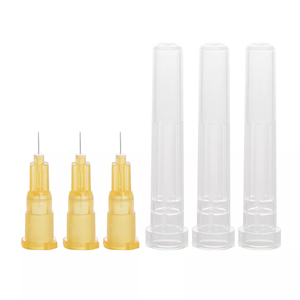
Precision-ground tri-bevel tip with automated silicone lubrication. EO gas sterilized, individually blister packed for clinical safety.
Send an Inquiry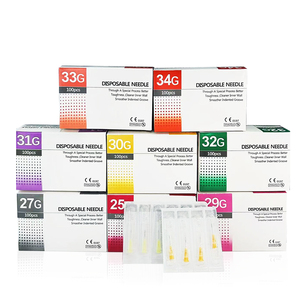
Engineered for aesthetic medicine, dermal fillers, and meso-treatments. Micro-polished cannula guarantees minimum insertion trauma.
Send an Inquiry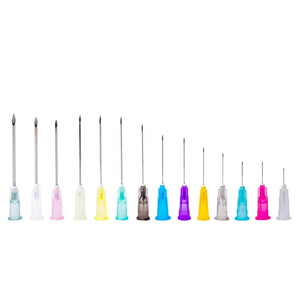
Color-coded PP hub compliant with ISO 6009. Compatible with Luer slip and Luer lock syringes for versatile hospital use.
Send an Inquiry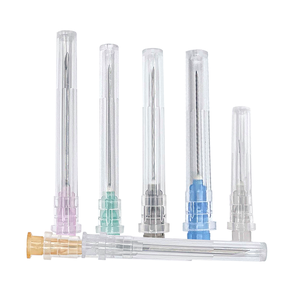
High-volume procurement standard for general clinical fluid delivery and blood sampling. High flow rate cannula design.
Send an Inquiry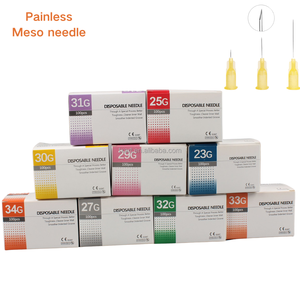
Specialized short length micro-needles optimized for hyaluronic acid and high-viscosity dermal filler injection procedures.
Send an Inquiry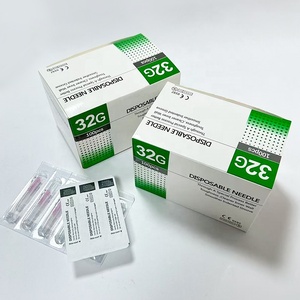
Ultra-thin gauge needle featuring low puncture drag force. Ideal for pediatric care, insulin injection, and sensitive dermatological application.
Send an Inquiry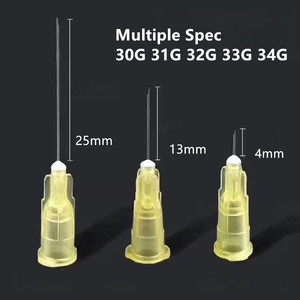
Ultra-short length (1.5mm–4mm) nano cannula designed for surface mesotherapy, scalp treatments, and controlled epidermal delivery.
Send an Inquiry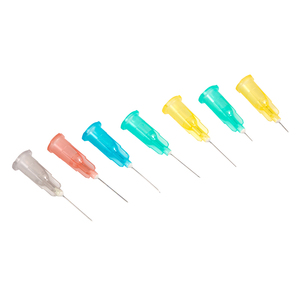
Fully customizable private-label solutions including hub coloring, cannula length, outer sheath branding, and multi-lingual IFU printing.
Send an InquiryWhitepaper insight into our automated manufacturing line, metallurgical compliance, and cleanroom sterilisation standards.
At Mediplus (Shree Umiya Surgical Pvt. Ltd.), our contract manufacturing framework operates under strict quality management systems (QMS) certified to ISO 13485:2016 and ISO 9001:2015. The foundation of every hypodermic needle lies in raw material selection. We source premium-grade AISI 304 and 316L stainless steel tubing characterized by high tensile strength, exceptional corrosion resistance, and flawless ductility.
Every batch of stainless steel cannula undergoes rigorous chemical analysis, spectral verification, and mechanical stress testing prior to cleanroom entry. This ensures that the cannula maintains structural rigidity even under micro-gauge specifications (such as 33G and 34G ultra-fine needles) without structural buckling or fracture risks during tissue insertion.
Our vertically integrated facility in Vatva, Ahmedabad spans granule-to-carton assembly, featuring ISO Class 7 (Class 10,000) and ISO Class 8 cleanrooms equipped with positive pressure differential controls and HEPA filtration systems to eliminate particulate contamination.

Precision lancet cut, back-bevel, and primary bevel combination designed to slice tissue smoothly rather than tear it, ensuring minimal patient trauma and reduced post-injection bruising.
Automated ultrasonic spraying applies a uniform, medical-grade silicone lubricant film along the needle shaft, eliminating drag force during deep intramuscular or subcutaneous delivery.
100% Ethylene Oxide (EO) sterilization with validated aeration cycles guaranteeing biological indicator clearance (SAL 10⁻⁶) and residual EO limits compliant with ISO 10993-7.
How cutting-edge metallurgy, micro-machining, and safety engineering are redefining global hypodermic needle production.
The pharmaceutical industry's rapid shift toward high-viscosity biologics, monoclonal antibodies, and long-acting injectable suspensions requires larger internal diameters without increasing outer needle dimensions. UTW technology thins the stainless steel wall by up to 30% while retaining structural integrity.
This innovation increases the inner lumen area, significantly reducing fluid flow resistance and extrusion force for clinicians while enabling the use of finer gauges (e.g., 27G UTW replacing 23G regular wall), leading to reduced patient discomfort.
Minimally invasive cosmetic dermatology, dermal filler administration, and micro-mesotherapy demand micro-cannulas ranging from 30G down to 34G with lengths as short as 1.5mm to 4mm.
Manufacturing 34G needles requires ultra-precise laser beveling and microscopic deburring under automated optical systems (CCD cameras) to eliminate micro-burrs that could cause skin laceration or post-procedure edema.
To eliminate needle-stick injuries (NSIs) among healthcare workers, global healthcare mandates (such as OSHA guidelines and EU Directive 2010/32/EU) are accelerating the replacement of standard needles with engineered safety devices.
Next-generation safety hypodermic needles feature integrated protective shields, spring-assisted retraction mechanisms, or audible click-lock hinged sleeves that permanently enclose the sharp tip immediately following administration.
Traditional manual assembly cannot meet the stringent defect-rate thresholds (AQL 0.65) required for Class III medical devices. Modern factories implement high-speed automated indexing machines capable of producing over 50,000 needles per hour.
Integrated inline machine vision systems inspect 100% of needle points for hook-points, bevel irregularities, glue overflow at the hub junction, and hub color accuracy according to ISO 6009 standards.
Key procurement vectors for medical device importers, government health tenders, and private label brand owners.
| Procurement Vector | Traditional Approach (Legacy) | Future Sourcing Trend (2025+) | Impact on B2B Buyer Strategy |
|---|---|---|---|
| Regulatory Pathways | Basic ISO 9001 / CE Mark (MDD) | EU MDR (2017/745) Class IIa/III & US FDA 510(k) | Requires comprehensive technical dossiers, clinical evaluation reports (CER), and UDI compliance. |
| Manufacturing Diversification | Single-region reliance | Multi-hub & India Nearshoring | Buyers diversify contract manufacturing to resilient hubs like India (Vatva, Ahmedabad) to reduce tariff risk. |
| Sustainability & ESG | Standard fossil fuel power & non-recyclable packaging | Solar-Powered Plants & Zero EO Residuals | Hospitals require carbon-neutral supply chains, energy-efficient manufacturing, and sustainable packaging materials. |
| Customization Level | Catalog SKUs only | OEM Full-Tailored Engineering | Custom bevel angles, non-standard lengths (1.5mm–80mm), customized hub pigments, and multi-lingual IFUs. |
Global medical device procurement leads are shifting focus from unit-price purchasing to Total Cost of Ownership (TCO) optimization. Freight volatility, stringent customs audits, and quality recall risks mean that partnering with a reliable, certified OEM factory is paramount.
Shree Umiya Surgical Pvt. Ltd. (Mediplus) provides strategic advantages including transparent container loading optimization, quick artwork proofing (5–7 working days), and short lead times (3–4 weeks for standard lines, 6–8 weeks for custom OEM tooling).
Cross-reference gauge sizes, outer diameters, wall configurations, and primary clinical applications for procurement planning.
| Gauge Size | Color Code (ISO 6009) | Nominal Outer Diam. (mm) | Wall Configuration | Recommended Clinical Application |
|---|---|---|---|---|
| 16G – 18G | White / Pink | 1.60mm – 1.20mm | Regular Wall (RW) | Blood collection, medication compounding, high-viscosity drug transfer. |
| 21G – 22G | Green / Black | 0.80mm – 0.70mm | Regular / Thin Wall | Standard intramuscular (IM) injections, routine phlebotomy, hospital general care. |
| 23G – 25G | Blue / Orange | 0.60mm – 0.50mm | Thin / Ultra-Thin Wall | Subcutaneous (SC) injections, pediatric administration, vaccine delivery. |
| 27G – 30G | Grey / Yellow | 0.40mm – 0.30mm | Ultra-Thin Wall (UTW) | Insulin injection, fine intradermal administration, ophthalmic procedures. |
| 31G – 34G | Light Green / Purple | 0.26mm – 0.18mm | Micro-Thin Wall | Painless mesotherapy, dermal fillers, facial aesthetics, micro-needle arrays. |
Clear, direct answers regarding quality credentials, export logistics, tooling capabilities, and private label support.
Our facility operates under an ISO 13485:2016 and ISO 9001:2015 certified Quality Management System. Every export consignment is accompanied by batch-specific Certificates of Analysis (CoA), Sterilization Release Records (Ethylene Oxide residual test reports per ISO 10993-7), Free Sale Certificates (FSC), and full CE compliance documentation under the EU MDR pathway. Registration technical files are available for Ministry of Health (MoH) submissions in global export territories.
For standard catalogue items, our standard MOQ starts at 1 pallet per SKU. For custom OEM and private-label programs (featuring buyer-specified artwork, custom hub colors, unique needle lengths, and localized IFU manuals), the baseline order is typically one 20-foot container (mixed SKUs allowed). Standard production lead times are 3–4 weeks post-artwork approval, while custom tooling or new registration lines require 6–8 weeks.
We utilize automated penetration force testing machines compliant with ISO 7864 standards. Needles are sampled every hour from the production line and pushed through standardized polyurethane membrane substrates to measure peak insertion force and drag force. Additionally, 100% optical inspection with high-resolution vision sensors identifies tip deformities, burrs, or glue inconsistencies, automatically ejecting non-conforming units prior to packaging.
Yes. As a dedicated OEM/ODM manufacturer, we offer full custom engineering. We produce needle lengths ranging from 1.5mm up to 80mm, with wall options including Regular Wall (RW), Thin Wall (TW), and Ultra-Thin Wall (UTW). We also customize bevel geometry, offering standard lancet bevels, short bevels (for arterial/intradermal use), and blunt filling needles according to your specific clinical application.
We primarily utilize Ethylene Oxide (EO) gas sterilization in automated chambers, with cycle parameters validated according to ISO 11135. Gamma irradiation sterilization is also available depending on product materials and buyer specifications. Biological indicators (Bacillus atrophaeus) are placed in every sterilization charge to verify a Sterility Assurance Level (SAL) of 10⁻⁶ prior to batch release.
We export to over 70 countries via major ocean ports in India, primarily Mundra Port and Nhava Sheva (JNPT) Port. We support standard international commercial terms including FOB, CIF, CFR, and DDP/DDU for select markets. Export packaging utilizes heavy-duty corrugated cartons engineered for container stacking and humidity resistance during long ocean transit.
From technical drawing approval to final global dispatch, our streamlined process ensures transparent project management.
Definition of gauge, length, wall thickness, hub color, bevel profile, and target packaging.
Rapid prototyping, artwork proofing within 5-7 days, and pilot sample batch production for client sign-off.
Automated high-speed indexing assembly in ISO Class 7 cleanroom under strict inline vision monitoring.
Sterilization cycle validation, bioburden testing, EO residual analysis, and Certificate of Analysis issuance.
Container consolidation, custom export documentation, and shipping via Mundra or Nhava Sheva ports.
Whether you require standard clinical bulk supply, private-label hospital packaging, or specialized ultra-fine mesotherapy needles, our engineering team is ready to fulfill your exact parameters.