
Engineered for optimal blood flow rates ($Q_b > 400\text{ mL/min}$), minimized recirculation, and clinical longevity. Certified under ISO 13485 and EU MDR Class IIb/Class III pathways for global distribution.
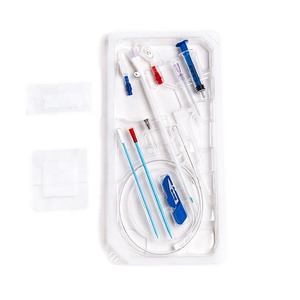
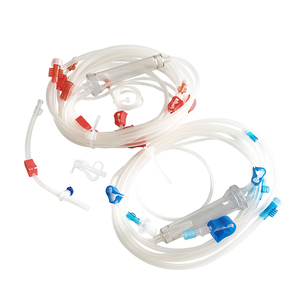
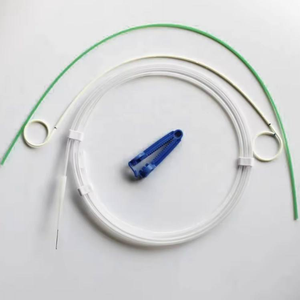
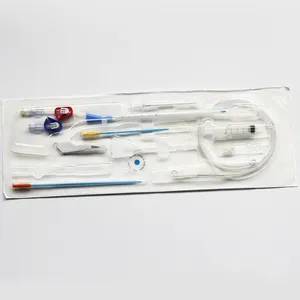
As a tier-one contract manufacturer located in Vatva, Ahmedabad, India (Shree Umiya Surgical Pvt. Ltd. / Mediplus), we provide end-to-end original equipment manufacturing (OEM) and custom kit assembly. We bridge engineering specifications, international compliance, and cost-effective bulk export logistics.
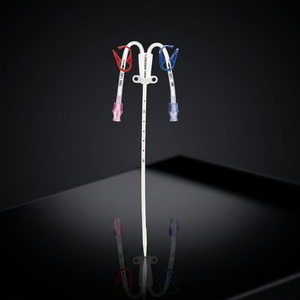
We extrude medical-grade Thermoplastic Polyurethane (TPU) and platinum-cured silicone with exact wall thickness and dimensional tolerances. Choose between step-tip, split-tip, and symmetrical tip profiles engineered to maintain arterial-venous pressure balance and minimize thrombus formation.
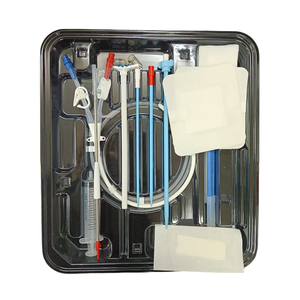
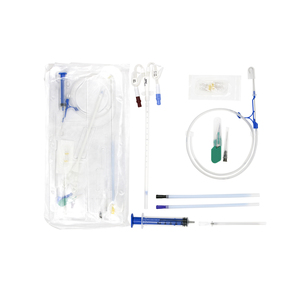
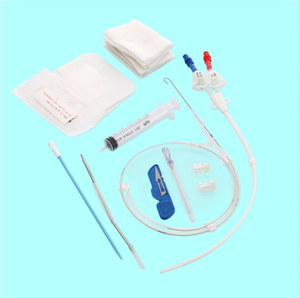
Build custom catheter trays tailored for clinical nephrology units. Options include nitinol or stainless steel guidewires ($0.035\text{"}–0.038\text{"}$), vessel dilators, echogenic introducer needles, scalpels, suture wings, drapes, and heparin lock caps—all packaged in EO-permeable sterile blister trays.
Speed up registration with your local Ministry of Health. We supply comprehensive STED-compliant technical documentation, biological evaluation reports (ISO 10993 series), EO residue validation (ISO 10993-7), accelerated shelf-life studies, and Free Sale Certificates (FSC).
Evaluating material dynamics and hydrodynamic innovations driving long-term vascular access, patient safety, and mechanical reliability.
| Performance Parameter | Polyurethane (Carbothane™ TPU) | Liquid Silicone Rubber (LSR) | Clinical & Sourcing Advantage |
|---|---|---|---|
| Tensile Strength & Wall Thinning | Exceptionally High (Enables larger inner lumen ratio) | Moderate (Requires thicker wall profiles) | TPU delivers higher flow rates ($Q_b > 400\text{ mL/min}$) at smaller French sizes (e.g., 11.5F to 14F). |
| In-Vivo Softening Behavior | Rigid at room temp; softens rapidly at $37^\circ\text{C}$ body temp | Consistently soft across all thermal ranges | TPU provides easy insertion via Seldinger technique, then softens in the vein to minimize vascular trauma. |
| Chemical & Solvent Resistance | High resistance to alcohol, iodine, and chlorhexidine dressings | High resistance, but prone to swelling with certain lipid mixtures | TPU allows aggressive site cleaning with alcohol-based antiseptics without catheter degradation. |
| Thrombogenicity & Coating Compatibility | Excellent substrate for Heparin & Antithrombotic hydrogels | Inherently hydrophobic; low surface tension | Coated TPU reduces fibrin sheath formation, lowering catheter dysfunction rates over 90+ days. |
| Radio-Opacity Integration | Uniform loading with 15%–20% Barium/Bismuth Sulfate | Encapsulated radiopaque stripes or full filler loading | Provides high fluoroscopic and X-ray clarity for tip placement at the cavoatrial junction. |
Traditional step-tip catheters often suffer from recirculation ratios exceeding 5% when blood flow lines are reversed. Modern OEM designs focus on split-tip and symmetrical-tip geometries. By spatially separating the arterial suction port from the venous return port, fluid dynamic turbulence is minimized. This maintains recirculation below 2% even under high flow rates ($450\text{ mL/min}$), curbing clot buildup and preserving dialysis efficacy.
Catheter-related bloodstream infections (CRBSIs) remain a major cause of morbidity in hemodialysis patients. Future procurement strategies prioritize catheters with eluting or non-eluting surface modifications. These include silver nanoparticle impregnation, chlorhexidine-sulfadiazine coatings, and durable hydrophilic polymer layers that resist bacterial adhesion (such as *Staphylococcus aureus* and *Staphylococcus epidermidis*).
Strategic insights for hospital Group Purchasing Organizations (GPOs), regional importers, and healthcare tender authorities.
The transition from the legacy Medical Device Directive (MDD) to the rigorous EU MDR 2017/745 has disrupted supply chains. Importers are migrating away from vendors unable to support upgraded Class III/Class IIb technical documentation, clinical evaluations, and Post-Market Surveillance (PMS). Purchasing teams are locking in long-term contracts with ISO 13485 certified manufacturers who maintain active CE MDR dossiers.
Hospitals are shifting away from sourcing individual dialysis components from multiple suppliers due to sterilization risk and handling overhead. Modern procurement mandates all-in-one sterile insertion packs containing catheters, guidewires, dilators, scalpels, drapes, and dressings. This reduces preparation time in clinical settings and establishes single-source accountability.
Global medical device distributors are diversifying sourcing networks to mitigate geopolitical risks and tariff fluctuations. India has emerged as a premier hub for high-precision medical disposables manufacturing. Modern infrastructure—such as Mediplus's automated extrusion lines and ISO Class 7/8 cleanrooms in Ahmedabad—delivers Western-grade quality at competitive landed costs.
Established in 1988 in Ahmedabad, India, Mediplus has grown into a leading global manufacturer and exporter of single-use medical consumables across 70+ countries.
From medical-grade polymer compound verification to high-speed lumen extrusion, precision tip molding, cleanroom assembly, and ethylene oxide (EO) sterilization, all operations are managed under one roof in Vatva, Ahmedabad. This guarantees full batch-to-batch consistency and total lot traceability.
Our plant operates under certified ISO 13485 and ISO 9001 Quality Management Systems. Products are assembled in monitored ISO Class 7 and Class 8 cleanrooms featuring positive pressure differentials, micro-particle filtration, and strict gowning protocols to maintain ultra-low bioburden levels prior to sterilization.
Mediplus is committed to environmental stewardship. Our primary manufacturing campus integrates roof-mounted solar power arrays, significantly offsetting grid energy consumption and reducing the carbon footprint of every sterile catheter kit exported worldwide.
Detailed regulatory, technical, and procurement answers for medical device buyers and importers.
Our manufacturing facility in Vatva, Ahmedabad is certified to ISO 13485 and ISO 9001. Our dialysis catheter families carry CE marks aligned with the EU MDR pathway. Every export shipment includes a Certificate of Analysis (CoA), EO Sterilization Batch Release Certificates, Bioburden Test Summaries, and Free Sale Certificates (FSC) to facilitate smooth customs clearance and MoH registration.
We provide comprehensive OEM/private-label branding services. Buyers can specify customized outer box artwork, pouch printing, multilingual Instructions for Use (IFU), GTIN/GS1 barcodes, and Unique Device Identification (UDI) compliance. You can also customize kit contents—selecting specific guidewire materials (nitinol vs. stainless steel), needle gauges, vessel dilator lengths, and drape sizes.
Standard catalog items ship with an MOQ of one pallet per SKU. For private-label branding and OEM tray configurations, MOQs typically start at a single 20-foot container (mixed SKUs allowed). Standard catalog reorders ship in 3–4 weeks. New OEM setups requiring artwork proofing or custom tooling ship within 6–8 weeks from artwork sign-off.
Sterilization is executed under validated Ethylene Oxide (EO) cycles adhering to ISO 11135 standards. Each batch undergoes rigorous aeration and gas chromatography testing to ensure EO and Ethylene Chlorohydrin (ECH) residual levels fall well below the strict safety thresholds defined by ISO 10993-7.
We utilize medical-grade aromatic polyurethane (Carbothane™ TPU) or platinum-cured silicone elastomers. Polyurethane offers superior tensile strength, enabling thinner lumen walls with larger internal cross-sectional areas. This achieves consistent blood flow rates ($Q_b > 400\text{ mL/min}$) while maintaining high kink resistance during dynamic patient repositioning.
Yes. Our in-house regulatory affairs department provides full support for product registration across Latin America, the Middle East, Africa, CIS, and Southeast Asia. We supply STED-formatted technical dossiers, ISO 10993 biocompatibility test data, real-time stability data, and embassy-legalized legal documents upon request.
We export globally via major sea and air hubs in India, including Mundra Port, Nhava Sheva (JNPT) Port, and Ahmedabad International Airport. Standard Incoterms offered include EXW, FOB, CFR, CIF, and DDP depending on client preferences.
Connect directly with our senior export sales team and regulatory specialists in Ahmedabad, India. We offer direct factory pricing, technical datasheets, and sample kits for hospital evaluations and tender bids.