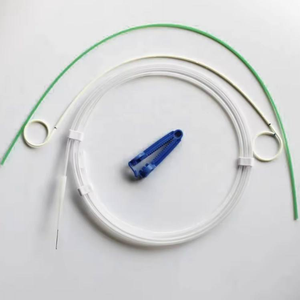
Direct factory supply manufactured under ISO 13485 quality systems with complete technical compliance and CE mark validation.
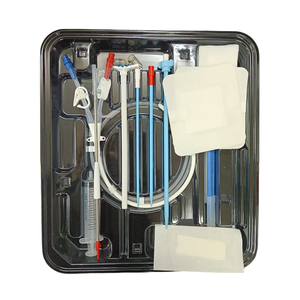
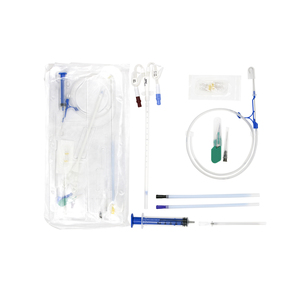
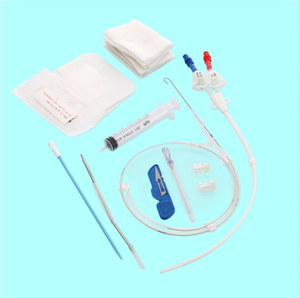
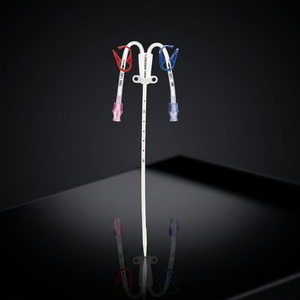
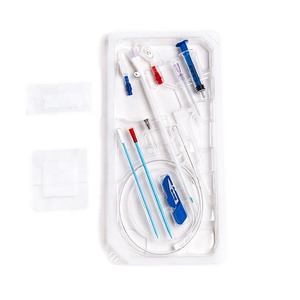
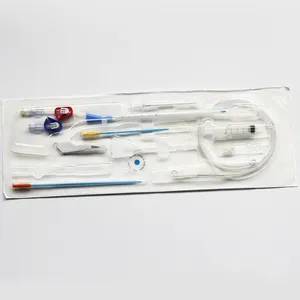
Modern interventional oncology and histopathological diagnostics depend heavily on the mechanical precision, sharpness, and echogenicity of percutaneous biopsy needles. As a premier Custom OEM Biopsy Needle Factory & Exporter, Shree Umiya Surgical Pvt. Ltd. (operating globally under the flagship brand Mediplus) bridges the critical gap between high-precision biomedical metallurgy and scalable cleanroom manufacturing.
Tissue sampling for liver, renal, breast, prostate, lung, and bone marrow biopsies requires minimal penetration force to protect tissue architecture, eliminate fragment crushing, and provide clean histological samples. OEM contracts demand consistent tolerances, ultra-sharp bevel geometries, biocompatible materials, and reliable private-label sterilization options. This whitepaper analyzes engineering standards, material selections, contract OEM manufacturing capabilities, and global procurement trends driving interventional surgical devices.
Core Procurement Value Insight: OEM biopsy needle buyers are transitioning from standard off-the-shelf devices to custom-engineered needles tailored for specialized ultrasound, CT-guided, and MRI-guided procedures. Having dedicated tooling, custom gauge sizing (10G through 22G), and full technical dossier support accelerates regulatory approval in international markets.
A surgical biopsy needle assembly comprises several synchronized mechanical sub-components. Each component must undergo strict quality controls to ensure high clinical performance:
Our automated CNC needle-grinding production lines utilize multi-axis electrochemical and diamond-wheel sharpening techniques. This achieves micro-burr-free needle tips that lower insertion force by up to 28% compared to industry baselines.
Assembled inside certified ISO Class 7 and Class 8 environmental cleanrooms in Vatva, Ahmedabad. Every product lot undergoes validated Ethylene Oxide (EO) or Gamma irradiation processing supported by bioburden, chemical indicator, and EO-residue analytical reporting.
Choosing the right interventional device depends on target tissue density, lesion location, diagnostic requirements (histology vs. cytology), and guiding modality. The comparative technical matrix below outlines parameters provided for custom OEM project tooling:
| Biopsy Device Type | Common Gauges | Standard Lengths | Primary Clinical Application | Key OEM Customization Options |
|---|---|---|---|---|
| Semi-Automatic Core Biopsy Needle | 14G, 16G, 18G, 20G | 90mm, 150mm, 200mm | Soft tissue biopsies (Liver, Kidney, Breast, Prostate) | Adjustable sample notch (11mm/22mm), Echogenic band, Coaxial needle matching |
| Automatic Core Biopsy System | 12G, 14G, 16G, 18G | 100mm, 160mm, 250mm | High-density tumor lesions, deep intra-abdominal targets | Spring-loaded firing force optimization, reusable gun interface geometry |
| Fine Needle Aspiration (FNA) | 20G, 21G, 22G, 25G | 38mm, 90mm, 150mm | Cytological fluid/cell collection (Thyroid, Lymph node, Pancreas) | Chiba tip, Franseen tip, Westcott tip, depth markers, transparent hub lock |
| Bone Marrow Biopsy & Aspiration Needle | 8G, 10G, 11G, 13G | 70mm, 100mm, 150mm | Hematology, iliac crest bone marrow aspiration and core biopsy | J-type outer cannula point, ergonomic T-handle, core extraction cannula accessory |
| Coaxial Introducer Needle Set | 13G, 15G, 17G, 19G | 50mm, 100mm, 150mm | Access guide for multiple tissue samplings | Click-lock mechanism, color-matched hub, radiopaque markers |
For medical brand owners, hospital distributors, and procurement agents, factory-direct OEM collaboration offers significant operational advantages. Shree Umiya Surgical Pvt. Ltd. provides complete end-to-end support for contract manufacturing projects:
The global interventional biopsy device market is undergoing structural shifts driven by advancements in targeted therapies, genomic diagnostics, and minimally invasive procedures. Procurement teams and hospital administrators should evaluate these critical trends when sourcing suppliers:
Clinical teams increasingly demand single-use procedural tray kits that contain the primary core biopsy needle, a matching coaxial guide needle, localized anesthetic needles, skin scalpels, and specimen preservation vials. OEM suppliers capable of bundling Class II and Class III devices in unified sterile kits provide strategic supply chain efficiency to healthcare distributors.
As point-of-care ultrasound (POCUS) and artificial-intelligence-assisted lesion targeting expand in interventional radiology, needles must reflect acoustic waves reliably across steep entry angles. Next-generation micro-laser etching creates 360-degree reflective micro-textures that remain clearly visible on ultrasound displays, preventing misplacement during deep organ biopsies.
While 304L stainless steel remains the industry standard for CT and ultrasound-guided procedures, magnetic resonance imaging (MRI) demands non-ferromagnetic materials. Advanced OEM facilities are developing specialized Nitinol and titanium alloy biopsy needles that eliminate magnetic susceptibility artifacts while providing flexibility during complex anatomical access routes.
Global medical procurement strategies emphasize supply chain resilience, moving away from single-source manufacturing regions. Situated in Vatva, Ahmedabad—India's medical manufacturing capital—our facility delivers cost advantages, skilled biomedical engineering labor, robust IP protection, and reliable global freight connectivity via Mundra and Nhava Sheva ports.
Our quality management system enforces stringent line clearance, 100% optical inspection of needle points, and rigorous tensile-pull testing on hub-to-tube joints to ensure zero in-vivo detachment risks.
Integrating green energy initiatives, our manufacturing plant utilizes rooftop solar generation, reducing the operational carbon footprint for every sterile disposable kit exported worldwide.
Direct responses to technical, regulatory, and logistics queries commonly submitted by OEM procurement teams, medical device importers, and tender managers:
For standard catalogue items under private label, baseline MOQs typically start at 5,000 units per gauge/length SKU. For custom needle geometries requiring new mold tooling or non-standard cannula specifications, project MOQs begin at 10,000 to 20,000 units depending on component complexity. Mixed-SKU container orders are accommodated for global distributors.
Echogenicity is validated using standardized tissue-mimicking phantom models under real-time ultrasound examination. We test acoustic reflection across multiple insertion angles (30°, 45°, and 60°). Micro-groove depths and laser-pattern density are adjusted to ensure optimal needle visibility under B-mode ultrasound imaging without compromising structural integrity.
Yes. Our dedicated regulatory and graphic design desk creates buyer-branded Tyvek pouches, primary box artwork, shipping cartons, and multi-lingual IFUs (English, French, Spanish, Arabic, Portuguese, Russian). We generate GS1-compliant DataMatrix UDI barcodes to comply with US FDA GUDID and EU EUDAMED regulations.
We provide Ethylene Oxide (EO) sterilization validated under ISO 11135, as well as Gamma Irradiation validated under ISO 11137, depending on material compatibility. Each export consignment includes batch sterilization release records, biological indicator test reports, and residual EO/ECH analytical certificates.
We provide comprehensive registration dossiers, including ISO 13485:2016 certificates, CE Mark certificates, Free Sale Certificates (FSC) issued by licensing authorities, ISO 10993 biocompatibility test summaries, real-time and accelerated shelf-life stability data, and technical dossiers formatted for quick MOH submission across Latin America, the Middle East, Africa, Southeast Asia, and CIS regions.
Catalogue OEM items ship within 3 to 4 weeks following artwork approval and deposit confirmation. New custom-engineered projects requiring custom injection molds, custom tip tooling, or pilot clinical evaluations take approximately 6 to 8 weeks to complete validation and initial dispatch.
Talk directly with our biomedical engineering team to discuss custom needle specifications, sample evaluations, private-label branding, or tender support.