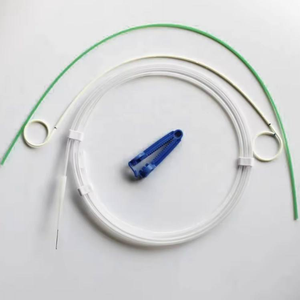
Explore cleanroom-manufactured, CE & ISO certified single-use surgical and catheterisation devices engineered for global healthcare distribution.
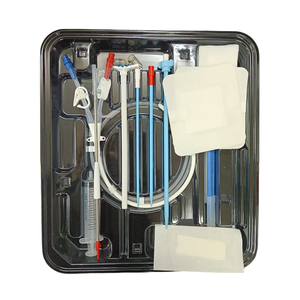
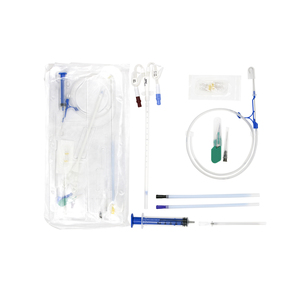
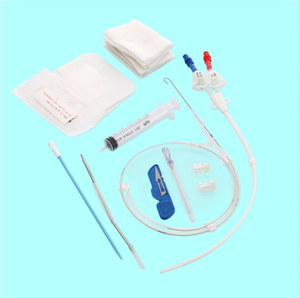
In modern clinical obstetrics and neonatal care, the umbilical cord clamp serves as a critical single-use surgical consumable designed to secure immediate hemostasis after delivery. Preventative management of neonatal hemorrhage and cross-contamination hinges on the structural integrity, clamping force retention, and bio-compatibility of these micro-molded devices. As global hospital procurement committees and medical device distributors re-evaluate their supply chains, identifying top-tier China Umbilical Clamp Suppliers & Exporters requires an analytical evaluation beyond unit pricing—encompassing material polymer science, cleanroom quality systems, regulatory registration dossiers, and automated high-speed molding capabilities.
Key Procurement Insight: Premium umbilical clamps must exhibit dual-lock anti-slippage serrations, zero latex/DEHP leachability under ISO 10993 parameters, and a minimum hinge flex retention of 15 N tensile resilience to guarantee absolute clinical safety during neonatal resuscitation and cord ligation.
Over the past three decades, China's medical device manufacturing sector has undergone a profound technical migration from manual assembly lines to fully automated Class 7 and Class 8 (100,000 cleanroom) environments. Leading manufacturers integrate precision injection molding with vision-inspection robotics, guaranteeing zero flash, smooth atraumatic edges, and precise locking-click feedback. For international tender buyers, hospital chains, and healthcare brand owners, partnering with established original equipment manufacturers (OEM) guarantees compliance with EU MDR 2017/745, US FDA 510(k) clearances, and ISO 13485 certification frameworks.
The performance of an umbilical clamp is intrinsically linked to its raw material selection and structural geometry. Leading China exporters utilize high-density medical-grade Polypropylene (PP) or Polycarbonate (PC) formulations that undergo stringent bio-safety screening. Below is a detailed technical comparative analysis of material grades and clinical performance metrics:
| Technical Parameter | Medical-Grade Polypropylene (PP) | Polycarbonate (PC) Grade | Regulatory Test Standard |
|---|---|---|---|
| Flexural Modulus | 1.3 – 1.6 GPa (High hinge memory) | 2.3 – 2.5 GPa (Rigid structural frame) | ISO 178 / ASTM D790 |
| Biocompatibility | Latex-free, Phthalate-free, Non-cytotoxic | BPA-free medical formulation | ISO 10993-5 / ISO 10993-10 |
| Sterilization Compatibility | Ethylene Oxide (EO) & Gamma Radiation | Ethylene Oxide (EO) Sterilisation | ISO 11135 / ISO 11137 |
| Clamping Force Decay | < 3% over 72 hours under 37°C | < 1% over 72 hours under 37°C | ASTM F2522 Occlusion Test |
| Locking Security | Double-Tooth Security Latch (Irreversible) | Snap-Lock Precision Click Mechanism | EN 868-5 / ISO 11607 |
To eliminate accidental reopening and tissue trauma, top China exporters incorporate specific structural elements into their umbilical clamp molds:
Cross-grooved surface ridges prevent lateral slippage along the moist Wharton's jelly layer of the umbilical cord, maintaining constant pressure without vascular wall shearing.
Designed with a single-way ratchet latch that clicks firmly into place. Once engaged, the clamp cannot be manually opened without a dedicated cutter, eliminating contamination risks.
Ergonomically contoured side wings provide non-slip leverage for obstetricians even when operating with wet surgical gloves, guaranteeing swift, controlled single-handed application.
The global neonatal and surgical consumables market is experiencing structural transformations driven by strict infection control protocols, rising birth rates in emerging markets, and unified international regulatory mandates. Procurement officers are shifting from transactional purchasing to strategic OEM partnerships with audited factories that demonstrate strong supply chain transparency and automated quality governance.
Environmental sustainability is becoming a pivotal criterion in European and North American hospital tenders. Leading Chinese manufacturers are actively pioneering bio-compatible, eco-friendly polymer variants derived from plant-based resin matrices. These next-generation umbilical clamps maintain identical tensile strength and clamping memory while reducing carbon emissions during incineration by up to 40%.
Modern hospital systems are bypassing standalone component purchasing in favor of pre-sterilized, ready-to-use Delivery Kits (Obstetric Surgical Packs). Leading exporters in China are scaling up cleanroom kitting capabilities, bundling umbilical clamps with scalpels, gauze swabs, suction catheters, and hemodialysis/vascular access lines in custom blister packs to streamline operating theater workflow.
The enforcement of the EU Medical Device Regulation (MDR) has raised the barrier to entry for low-tier factories. Future supply chain consolidation favors top-tier China suppliers equipped with exhaustive technical dossiers, Clinical Evaluation Reports (CER), and full UDI (Unique Device Identification) barcode integration for direct electronic health record (EHR) traceability.
Combining 36+ years of medical device engineering expertise with scalable export logistics for international distributors.

Our state-of-the-art manufacturing infrastructure operates under stringent international Quality Management Systems (QMS). Granule-to-carton vertical integration ensures complete control over raw material purity, molding tolerances, and sterile barrier packaging.
Request factory-direct pricing, custom OEM samples, or complete regulatory registration technical files today. Our export engineering team responds within 24 hours.