In modern critical care, clinical gastroenterology, and surgical rehabilitation, enteral tube feeding and gastric decompression represent foundational interventions. As healthcare systems globally enforce stricter risk mitigation protocols, procurement directors and medical disposable distributors must look beyond superficial unit pricing. Securing supply partnerships with a premier China Nasogastric Tube Factory & Exporters enterprise ensures access to cutting-edge polymer engineering, ISO 80369-3 compliance, and validated bio-compatibility standards.
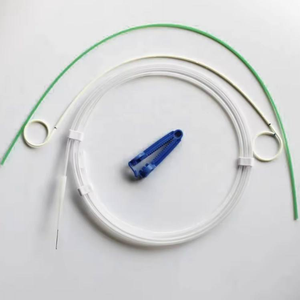
A Nasogastric (NG) tube is a specialized flexible catheter passed through the nares, down the esophagus, and directly into the stomach. It serves vital clinical functions: deliver nutrition, administer medications, decompress the stomach to prevent aspiration pneumonia, and sample gastric contents for diagnostic evaluation. The operational efficacy and patient comfort of these devices rely on advanced resin compounding, precision micro-extrusion, tip modification, and radio-opacity engineering.
"Information Gain Insight: The transition from legacy plasticized PVC to medical-grade Thermoplastic Polyurethane (TPU) and Liquid Silicone Rubber (LSR) has reduced hospital-acquired nasal mucosal ulceration rates by over 64% worldwide while extending safe continuous residency up to 90 days."
1. Polymer Comparison: TPU vs. Silicone vs. Non-DEHP PVC
Selecting the correct polymer substrate dictates the clinical indication, maximum anatomical residency period, and patient tolerance profile. Leading manufacturing facilities utilize three main polymer families:
Thermoplastic Polyurethane (TPU)
Engineered with thermo-sensitive memory properties. Rigid at room temperature for easy insertion without a stylet, it softens dynamically at physiological body temperature ($37^\circ\text{C}$), adapting seamlessly to nasal passages to minimize trauma. Suitable for mid-to-long term enteral feeding (up to 30 days).
Liquid Silicone Rubber (LSR)
Ultra-soft, inert, hydrophobic, and completely non-reactive. Silicone tubes resist gastric acid breakdown, lipid absorption, and fungal colonization better than any polymer. Ideal for long-term patient care (up to 90 days), pediatric intensive care units, and patients with severe latex or chemical sensitivities.
DEHP-Free Medical Grade PVC
Plasticized with non-phthalate alternatives (such as TOTM or DINCH) to satisfy European Union REACH and US FDA compliance. Economical and rigid, these tubes are optimized for short-term gastric decompression, emergency lavage, and post-operative suction (<7 days residency).
2. Structural Architecture & Anatomical Safety Features
High-precision extrusion lines produce tubes equipped with advanced structural modifications designed to eliminate clinical errors:
Continuous Radio-Opaque Stripe: Integrated with $\ge 40\%$ Barium Sulfate ($BaSO_4$) co-extruded along the full length of the tubing wall, allowing crisp X-ray and fluoroscopic location verification prior to food infusion.
Indelible Depth Markings: High-contrast, non-toxic depth rings placed precisely at 45 cm, 55 cm, 65 cm, and 75 cm from the distal tip assist clinicians in accurately tracking insertion depth.
Atraumatic Distal Tip Design: Closed rounded bullet tips or smoothly fire-polished open ends equipped with staggered lateral eyelets (Levin's or Ryle's configuration) maintain high-volume flow while preventing gastric mucosal suction injury.
ISO 80369-3 ENFit Safety Connectors: The elimination of universal Luer slip hubs prevents catastrophic accidental connection of enteral feeding lines to IV access ports or central lines.
Global Procurement Trends & Next-Generation Enteral Product Futures (2025–2030)
The international supply chain for medical disposables is undergoing a rapid evolution driven by stringent regulatory changes, hospital group purchasing organization (GPO) sustainability mandates, and technological convergence. Distributors and hospital buyers evaluating a Nasogastric Tube Exporter must align their purchasing strategies with key market trajectories:
1. Global Mandate for ENFit (ISO 80369-3)
Regulators across North America, Europe, Japan, and the Middle East are phasing out non-locking enteral connectors. Enterprise factories are standardizing production lines around dedicated male/female ENFit locking hubs, dual-port medication access points, and ENFit syringe transition adapters to guarantee total compliance.
2. Smart Placement Guidance & Bio-Sensing
Next-generation nasogastric systems feature embedded optical fiber pH sensors and micro-electromagnetic tracking sensors within the guide wire. This allows instant bedside verification of stomach entry without relying on X-ray exposure, shortening ICU workflow times significantly.
3. Antimicrobial & Biofilm-Resistant Coatings
Hospital-acquired infections (HAIs) and bacterial biofilm formation inside enteral tubes pose serious risks. Factories are integrating silver-ion impregnated polymers and hydrophilic lubrication coatings that resist bacterial adherence, cut friction coefficients during insertion, and minimize ventilator-associated pneumonia (VAP).
Global healthcare buyers are increasingly shifting away from single-region procurement to mitigate geopolitical risks and shipping bottlenecks. China's mature medical manufacturing ecosystem offers unparalleled supply chain advantages: vertically integrated resin synthesis, automated high-speed extrusion, in-house tooling, and massive cleanroom capacity. By establishing OEM partnerships with premier Chinese manufacturing hubs, global brands secure stable lead times, transparent unit economics, and custom OEM packaging support.
B2B Technical Material & Specification Comparison Matrix
Use this engineering reference table to determine the optimal nasogastric tube polymer specifications for hospital tenders, ICU procurement, and specialized gastroenterology distribution:
Our enterprise partner facilities operate under rigorous international quality frameworks to ensure that every catheter entering clinical workflow performs flawlessly. Production processes reflect complete compliance with global medical device regulations:
ISO Class 7 & 8 Cleanrooms
All extrusion, tip forming, eyelet punching, hub assembly, and primary pouch sealing take place in environmentally controlled cleanroom facilities operating under strict positive pressure, HEPA filtration, and particle monitoring.
100% Automated Optical Quality Control
High-speed vision inspection cameras inspect every tube for dimensional accuracy, wall thickness uniformity ($\pm 0.02\text{ mm}$), lateral port burr elimination, print legibility, and distal tip smoothness before assembly release.
Validated Sterilization & Bioburden Release
Single-use devices undergo validated Ethylene Oxide (EO) sterilization (complying with ISO 11135) or Gamma Irradiation. Batch release dossiers include biological indicator validation, chemical indicator verification, bioburden testing, and residual EO testing ($\le 4\text{ mg/device}$ as per ISO 10993-7).
Frequently Asked Questions (FAQ) for Global Buyers & Importers
Direct answers to technical, regulatory, and logistics queries standard for international hospital buyers, tender consultants, and private-label distributors.
Q1:
What makes your facility a preferred China Nasogastric Tube Factory & Exporter?
Our facilities combine over 36 years of precision medical disposable manufacturing experience with state-of-the-art cleanrooms (ISO Class 7/8), full ISO 13485 QMS certification, and CE MDR compliance. We offer complete vertical integration—from medical polymer resin formulation and micro-bore tube extrusion to automated tip shaping and private-label packaging—ensuring strict batch-to-batch consistency and competitive direct-factory pricing for export buyers in over 70 countries.
Q2:
How do your enteral tubes comply with the global ISO 80369-3 ENFit standard?
We offer full product lines featuring native ISO 80369-3 ENFit locking connectors. Our engineering team maintains dedicated injection molds for female and male ENFit hubs, dual-port enteral Y-sites, and stepped adapters. This eliminates the risk of accidental connection to intravenous IV sets, epidural lines, or central venous catheters, allowing immediate registration and distribution in EU, US, and UK healthcare markets.
Q3:
What tube material (PVC, TPU, or Silicone) is best suited for hospital tender bids?
For high-volume, price-sensitive public healthcare tenders focused on short-term gastric decompression, DEHP-free PVC Ryle's or Levin's tubes (Fr 6–Fr 20) offer the highest cost efficiency. For intensive care units (ICU), oncology wards, and extended enteral nutrition programs, Thermoplastic Polyurethane (TPU) or Liquid Silicone Rubber (LSR) tubes are recommended due to their long residency validation (30 to 90 days) and lower complication rates.
Q4:
Do you provide OEM, private-label packaging, and custom artwork support?
Yes. We specialize in OEM and ODM private-label production for international brand owners. Our in-house design and regulatory departments handle buyer-specified artwork, multi-lingual Instructions for Use (IFU), primary pouch printing, inner carton design, shelf display boxes, master shipping cartons, and UDI (Unique Device Identification) barcode integration. Proofing takes 5–7 business days.
Q5:
What regulatory documentation accompanies export shipments for MOH registration?
Every shipment is supported by a comprehensive regulatory technical file package. This includes ISO 13485:2016 and ISO 9001 certificates, CE Certificates under EU MDR pathway, Certificates of Free Sale (CFS), Batch Certificate of Analysis (CoA), Sterilization Release Dossiers, ISO 10993 Biocompatibility test summaries, and shelf-life stability data needed by Ministries of Health across LATAM, EMEA, APAC, and CIS regions.
Q6:
What is the standard minimum order quantity (MOQ) and shipment lead time?
For standard catalog items, MOQ starts at one pallet per SKU. For custom OEM packaging or specialized color-coded configurations, MOQ typically begins at a single 20-foot container mix. Standard lead times are 3–4 weeks following order confirmation and artwork sign-off. Expedited manufacturing schedules are available for urgent government emergency tenders.
Q7:
How is tube kink resistance and flow dynamics guaranteed during production?
We utilize high-precision micro-extrusion technology with real-time laser micrometer feedback control. This guarantees uniform wall thickness along the entire lumen length. Additionally, polymer formulations undergo rigorous tensile strength pull testing (>15 N) and kink-resistance testing under vacuum aspiration (30 kPa) to prevent wall collapse during continuous suction or high-viscosity food delivery.
Q8:
What sterilization methods are used and what is the shelf life guarantee?
Our medical disposables are sterilized using Ethylene Oxide (EO) gas or Gamma Irradiation in accordance with ISO 11135 and ISO 11137 standards. Products are sealed in medical-grade Tyvek or high-density paper-film peel pouches, providing a validated 3-year to 5-year sterile shelf-life guarantee when stored under standard warehouse conditions.
Partner with China's Premier Nasogastric Tube Manufacturer
Whether you are expanding your medical device brand, submitting a government healthcare tender, or upgrading your hospital supply chain, our engineering team is ready to deliver certified quality, competitive direct pricing, and fast turnaround times.