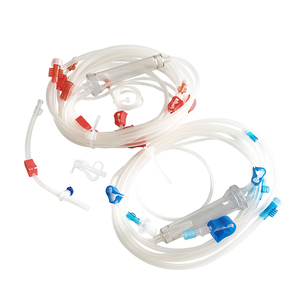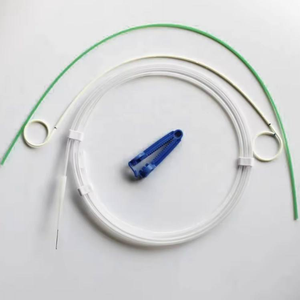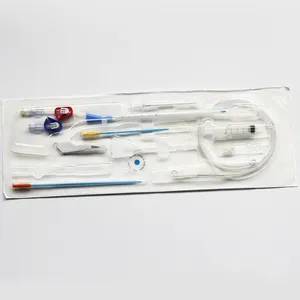
Precision-engineered disposable devices for dialysis, vascular access, and controlled intravenous flow rate management.
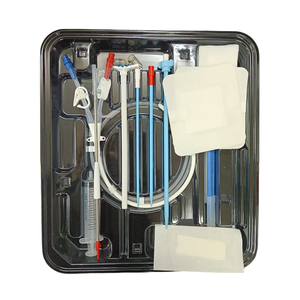
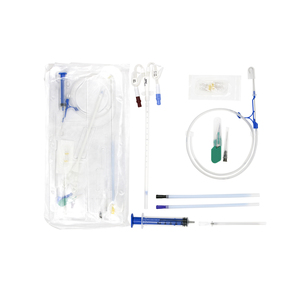
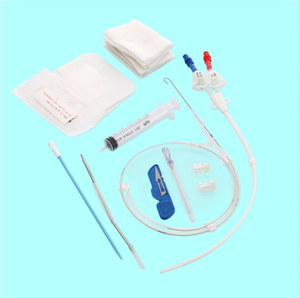
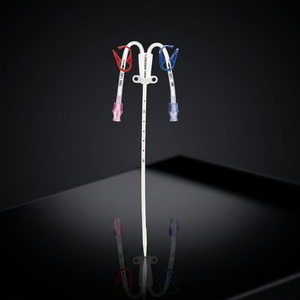
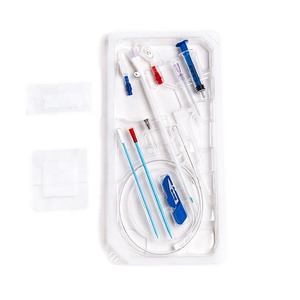
In modern critical care, oncology, and nephrology environments, intravenous micro-fluidics and hemodialysis access management demand absolute precision, material stability, and biological safety. As a premier CE certified flow regulator manufacturer and high-capacity production factory operating under strict ISO 13485 quality management systems, our engineering focus encompasses both gravity-driven precision flow control devices and advanced vascular access catheters.
Information Gain Benchmark: Precision IV flow regulators must maintain calibrated delivery accuracy within ±10% to ±15% across operating ranges from 5 ml/h to 250 ml/h, counteracting fluid viscosity shifts, patient posture movements, and head-pressure variations without requiring expensive electronic infusion pumps.
The performance of medical flow regulators and hemodialysis catheters relies fundamentally on advanced polymer selection. Traditional medical-grade PVC modified with plasticizers is rapidly giving way to DEHP-free plasticizers (such as TOTM or DINCH) and high-tier Thermoplastic Polyurethane (TPU) alongside platinum-cured silicone elastomers.
For long-term and short-term vascular access—such as 15F silicone-cuffed tunneled catheters or 7Fr double-lumen acute hemodialysis kits—thermoplastic polyurethane exhibits unique softening dynamics. At ambient room temperature (20°C–25°C), the polymer maintains structural rigidity required for smooth, atraumatic insertion over a nitinol guidewire. Upon exposure to physiological body temperature (37°C), the polymer's storage modulus drops predictably, allowing the lumen to conform gently to vascular pathways, thereby significantly reducing venous wall irritation, endothelial trauma, and subsequent thrombosis formation.
Dual-scale flow regulators calibrated for low-viscosity crystalloids and parenteral nutrition solutions, maintaining strict drop-rate consistency.
Double and triple lumen hemodialysis catheters engineered with side-hole configurations to maximize blood flow rates up to 400 mL/min while minimizing recirculation.
Direct OEM factory manufacturing allows healthcare systems and regional distributors to procure CE-marked disposables at optimal landed unit costs.
Precision flow regulators operate via ergonomic dial channels engineered with micro-stepped spiral grooves. As the clinician rotates the numerical dial, the cross-sectional area of the fluid channel shrinks or expands predictably. Ensuring consistent flow across 24-to-72-hour continuous infusion therapy requires strict dimensional control during injection moulding. Our state-of-the-art cleanroom manufacturing utilizes Swiss-engineered electric injection machinery capable of maintaining micro-channel tolerances within ±0.005mm, eliminating flow rate drift caused by thermal expansion or material creep under line pressure.
The global procurement landscape for medical disposables is undergoing a structural transformation. Group Purchasing Organizations (GPOs), hospital chains, and Ministry of Health (MoH) tender boards are prioritizing suppliers that combine regulatory transparency, environmental sustainability, and localized OEM adaptation over simple low-cost bids.
B2B buyers are migrating away from legacy CE certificates toward strict EU MDR (Regulation 2017/745) Class IIa and Class III technical dossiers, requiring comprehensive clinical evaluation reports (CER) and post-market clinical follow-up (PMCF).
Global procurement directives mandate DEHP-free, latex-free, and BPA-free polymer formulations. Furthermore, cleanroom operations powered by renewable solar energy reduce total product carbon footprint.
Distributors are consolidating vendor bases into vertically integrated factories that offer turn-key private label artwork, localized multilingual IFUs, barcoding, and direct multi-container logistics.
Strategic Procurement Insight: Tender evaluators are increasingly auditing sterilisation release certificates. Consignments backed by dual Ethylene Oxide (EO) and Gamma Sterilisation validation data, along with zero EO-residue clearance under ISO 11135, clear customs and hospital QA approval 40% faster than non-validated shipments.
As medical device engineering advances, flow regulators and vascular access devices are evolving beyond passive fluid conduits into highly active, infection-resistant, and smart-compatible components.
Catheter-related bloodstream infections (CRBSI) and lumen occlusion present persistent challenges in intensive care and long-term hemodialysis. The latest technology trends focus on surface-grafted heparin coatings and silver-nanoparticle/chlorhexidine impregnations along the polyurethane catheter tube. These active coatings suppress fibrin sheath formation and inhibit microbial colonization, extending the secondary patency rate of tunneled dialysis catheters beyond 12 months.
Modern flow regulator sets are integrating self-sealing, needleless access valves and anti-siphon check valves directly into the tubing manifold. This design prevents backflow during multi-line infusions and protects healthcare workers from accidental needle-stick injuries and blood exposure, directly aligning with international occupational health standards.
Traditional mechanical punching of side-holes in double lumen dialysis catheters often leaves micro-burrs that attract platelet aggregation. Advanced factories utilize femtosecond laser drilling to create perfectly smooth, bevel-edged arterial and venous ports. This smooth geometry optimizes fluid dynamics, decreases shear stress on red blood cells (reducing hemolysis), and lowers recirculation rates below 2% even at high pump blood flow rates (Qb > 350 mL/min).
Established in 1988, Shree Umiya Surgical Pvt. Ltd. (Mediplus India) has spent over three decades building an internationally accredited manufacturing enterprise in Vatva, Ahmedabad, Gujarat, India. Serving hospital distributors, dialysis chains, and government tender buyers across 70+ countries, the enterprise delivers reliable single-use medical disposables engineered to rigorous clinical standards.
Granule-to-carton vertical integration inside environmentally controlled cleanrooms with continuous positive pressure, particulate monitoring, and strict gowning protocols.
In-house regulatory affairs team providing Free Sale Certificates, Technical Files, Biocompatibility Summaries (ISO 10993), and legalized documentation for fast registration.
Our manufacturing plant operates cleanroom lines powered by extensive rooftop solar power arrays, lowering environmental impact while maintaining stable energy costs.
Every single batch produced at our facility undergoes strict quality assurance protocols—including leak testing, tensile force verification for hub connections, flow rate calibration, and biological indicator release following Ethylene Oxide (EO) sterilization. By keeping all core operations—mold tooling, tube extrusion, tip forming, printing, cleanroom assembly, and packaging—in-house, Mediplus guarantees lot-to-lot consistency for every container shipped.
Direct technical and logistical answers for medical device importers, regional distributors, and hospital procurement officers.
Our manufacturing facility in Vatva, Ahmedabad operates under a Quality Management System certified to ISO 13485 and ISO 9001. Our product families—including flow regulators, infusion sets, central venous catheters, and hemodialysis catheter kits—hold CE certificates under the EU MDR/MDD pathways. Batch-wise Certificates of Analysis (CoA), sterilisation release records, and raw material safety datasheets accompany all export shipments.
Yes. We support extensive OEM and private-label contract manufacturing. We customize outer pouch printing, inner tray configuration, carton dimensions, multilingual Instructions for Use (IFU), and buyer-specified barcode/UDI systems. Artwork proofing and digital layout approvals typically take 5–7 working days, followed by sample verification prior to commercial mass production.
For standard catalogue items under the Mediplus brand, minimum order quantities start at single-pallet volumes per SKU. Private-label programs generally require a consolidated 20-foot container order (mixed SKUs allowed). Standard lead times for containerized production are 3 to 4 weeks after artwork confirmation and LC/deposit receipt. Shipments are handled via Mundra or Nhava Sheva ports on FOB, CIF, or CFR terms.
Single-use disposables are sterilised using validated Ethylene Oxide (EO) gas chambers or Gamma Irradiation depending on material compatibility. Every sterilisation cycle is monitored using chemical indicators, biological indicators (Bacillus atrophaeus / Geobacillus stearothermophilus), and residual gas testing in accordance with ISO 11135 standards. Full sterilisation validation dossiers are provided for tender and MoH registration needs.
Absolutley. Our in-house regulatory affairs team compiles complete technical dossiers (STED format), Free Sale Certificates (FSC), ISO 13485 certificates, CE certificates of conformity, biocompatibility test summaries (ISO 10993), accelerated stability test reports, and embassy-legalized/apostilled documents required by Ministries of Health across Latin America, Africa, the Middle East, CIS regions, and Southeast Asia.
Mediplus flow regulators are engineered to deliver flow precision within ±10% to ±15% of the set scale reading across a range of 5 ml/h to 250 ml/h under standard head-height pressure (1 meter). Precision-molded channel grooves minimize flow decay, providing continuous, stable fluid administration for up to 72 hours of uninterrupted therapy.