
Choosing a Central Venous Catheter Kit is a patient-safety decision, not merely a purchasing preference. Central-line insertion involves several small actions: hand hygiene, skin antisepsis, sterile draping, catheter placement, dressing, and documentation. Missing one step can contaminate the field. A loose cap or torn wrapper may matter.
The CDC’s Guidelines for the Prevention of Intravascular Catheter-Related Infections recommend maximal sterile barriers and appropriate skin preparation during central-line insertion. Its National Healthcare Safety Network also tracks central-line-associated bloodstream infection as a key hospital safety measure. AHRQ’s CUSP and Keystone ICU initiatives showed that standardized processes, supported by checklists and team accountability, can substantially reduce CLABSI rates. These findings support kits that place essential components together, with clear packaging and fewer interruptions.
Peter Pronovost, whose ICU safety research influenced central-line practice, said, “We need to make it easier for people to do the right thing.” A well-designed Central Venous Catheter Kit follows that principle. It can reduce preparation time, support aseptic technique, and improve supply consistency across procedure rooms. However, the kit is not magic. Training, competency assessment, product quality, and local protocol still determine outcomes. Some kits may include unnecessary items, while others may lack components required by a hospital’s policy. That weakness deserves honest review.
The right choice should reflect clinical evidence, staff experience, catheter type, infection-prevention requirements, and reliable supplier support. A careful evaluation asks a practical question: does this kit make safe practice easier at the bedside?
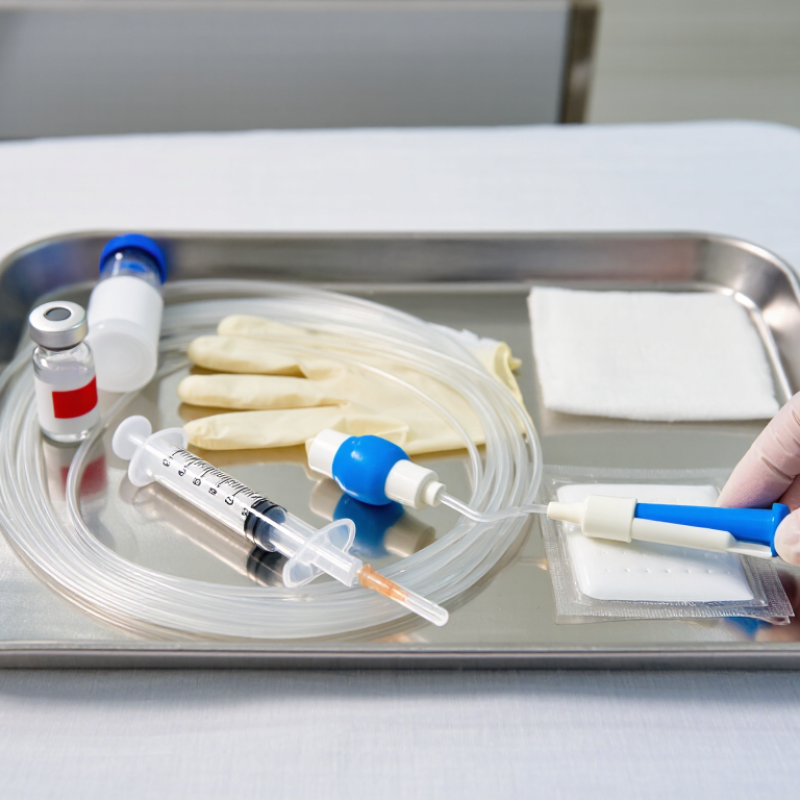
A central venous catheter kit is a prepared collection of sterile tools used to support central line placement. It is not simply a catheter in a box. The kit commonly includes the catheter, guidewire, introducer needle, dilator, syringes, needles, sterile drapes, dressing materials, and injection caps. Some kits also contain ultrasound covers or local anesthetic supplies.
The catheter provides access to a large vein near the heart. Clinicians may use it when peripheral access is difficult or when treatment requires reliable venous delivery. The guidewire helps position the catheter carefully, while the dilator creates a suitable path through the skin and tissue. Each component has a specific role. Missing one small item can interrupt a sterile procedure.
Contents differ by patient needs and clinical setting. A kit for an adult may not suit a child, emergency procedure, or long-term therapy. Staff should inspect the package, expiration date, seal, and component list before use. A complete kit can reduce searching during a stressful procedure, but it cannot replace training, ultrasound skills, infection-control practice, or clinical judgment. A rushed setup may still cause confusion. Careful checking matters.
A central venous catheter kit brings essential access and protection items together for a controlled procedure. Contents vary by catheter type and clinical setting, so staff should check the package before use. A typical kit includes a sterile catheter, introducer needle, guidewire, dilator, syringe, scalpel, and guidewire protector. It may also contain a sterile drape, gloves, antiseptic solution, ultrasound probe cover, and local anesthetic supplies.
The kit often includes extension tubing, needleless connectors, flush syringes, suture or securement devices, and a sterile transparent dressing. Some kits provide a pressure transducer connector or blood-sampling accessory. These details matter. A missing cap or poorly matched connector can interrupt the procedure and increase contamination risk. Catheter size and lumen number should match the patient’s needs, intended therapy, and institutional protocol. Experienced clinicians still verify every component.
Why Choose a Central Venous Catheter Kit?
How Does the Kit Support Catheter Placement?
A central venous catheter kit turns a complex procedure into a controlled sequence. It commonly gathers sterile gloves, gowns, drapes, skin antiseptic, guidewire components, and a needle. The arrangement matters. Opening one organized pack reduces searching, interruptions, and unnecessary contact with the sterile field.
The kit also supports ultrasound-guided placement when it includes a sterile probe cover and gel. A 2023 Cochrane review found ultrasound guidance probably reduces failed attempts and arterial punctures compared with landmark techniques. CDC guidance recommends maximal sterile barriers during central line insertion. These barriers help protect the patient when the operator handles the catheter, wire, and dilator. Small details count.
Evidence links reliable processes with fewer infections. In the landmark Keystone ICU study, reported in the New England Journal of Medicine, the median bloodstream infection rate fell from 2.7 to 0 per 1,000 catheter-days after a bundled safety program. AHRQ’s national CUSP project later reported a 41% CLABSI reduction across participating intensive care units. The kit did not create those results alone. Training, hand hygiene, skin preparation, and daily line review were also essential.
Still, a kit cannot replace clinical judgment. I would check package integrity, expiration dates, and component completeness before preparation. That step is easy to rush. It should not be. A missing sterile cover or unsuitable catheter size can disrupt the procedure and invite improvisation. Standardization supports safer placement, but reflective practice remains necessary at every bedside.
A standardized central venous catheter kit brings every essential item into one controlled setup.
The clinician can find the guidewire, dilator, sterile drape, antiseptic, and dressing without opening several packs. Fewer searches mean fewer interruptions at the bedside. It also supports consistent preparation across experienced and newly trained staff. The difference can be visible: one tray, one checklist, and a clear sterile field.
Evidence supports standardized processes, although kits alone. In the Michigan ICU project, central line infections fell from 2.7 to nearly zero per 1,000 catheter-days after checklist-based improvements, according to a 2006 New England Journal of Medicine study. AHRQ later reported a 41% reduction in central line-associated bloodstream infections through its national safety program.
These results involved training, auditing, hand hygiene, and leadership. Packaging helped the process, but it did not create the result.
A kit also improves traceability. Staff can record lot details, expiration dates, and missing components more easily. That matters during a busy insertion, especially when supplies are scattered across a crowded procedure room.
Still, a tidy kit can create false confidence. It cannot replace ultrasound competence, sterile technique, or careful line assessment. Teams should review unused items, waste, opening time, and near misses.
The best kit is not merely complete. It fits real workflow, and that requires regular reflection.
Why Choose a Central Venous Catheter Kit?
What Factors Guide Kit Selection and Safe Use?
Choosing a central venous catheter kit starts with the patient, not the packaging. Clinicians assess the intended therapy, access duration, vessel condition, and infection risk. A short treatment may need different components than long-term infusion therapy. The required lumen number also matters. More lumens can support complex care, but they may increase manipulation and infection opportunities.
Small details matter. Check the catheter size, length, guidewire compatibility, dilator, needle, syringe, and securement materials. Confirm package integrity and expiration dates before opening. Ultrasound guidance can improve vessel selection and reduce insertion complications when trained staff use it. Maintain maximal sterile barriers, skin antisepsis, and careful dressing placement according to current clinical guidance and local policy. Follow the kit’s instructions for use.
Preparation prevents avoidable errors.
In practice, a complete kit can still fail if the team lacks a clear plan. Staff should verify patient identity, allergies, coagulation concerns, and the intended tip position. After placement, assess patency and monitor for bleeding, arrhythmia, infection, thrombosis, or catheter migration. Documentation should include the site, device details, insertion conditions, and ongoing observations. No kit replaces clinical judgment. I have seen rushed preparation create more risk than limited equipment. Reviewing near misses can reveal gaps, even when the procedure appeared successful.
Key selection factors reflect widely recommended central-line safety practices: maximal sterile barriers, appropriate skin antisepsis, ultrasound guidance, and daily review of catheter necessity.
A well-designed kit helps standardize preparation and reduce omissions. Selection should match the insertion site, patient condition, catheter type, procedure length, and local infection-prevention policy. Use chlorhexidine-alcohol when not contraindicated, apply maximal sterile barriers, and reassess the need for the catheter every day.
A typical kit includes a sterile catheter, introducer needle, guidewire, dilator, syringe, and scalpel.
Some kits include extension tubing, needleless connectors, flush syringes, and securement devices.
Inspect the package, expiration date, catheter length, lumen number, and connector compatibility.
Selection depends on the therapy, treatment duration, vessel condition, and infection risk.
Multiple lumens can support complex treatment and simultaneous infusions.
Use ultrasound when appropriate and when trained staff are available.
Verify patient identity, allergies, coagulation concerns, and the planned catheter tip position.
Assess patency and observe for bleeding, arrhythmia, infection, thrombosis, or catheter migration.
Rushing the inventory can leave missing caps, mismatched connectors, or uncontrolled equipment.
A Central Venous Catheter Kit is a coordinated collection of sterile supplies designed to support the preparation, placement, and initial management of a central venous catheter. Depending on its intended use, the kit may include the catheter, guidewire, dilator, introducer needle, syringes, needles, local anesthetic supplies, sterile drapes, gloves, skin antiseptic, gauze, caps, and securement materials. By bringing essential components together in a clearly organized format, the kit helps clinicians follow a consistent workflow and reduces the need to gather items separately during a procedure.
A standardized kit can improve efficiency, support aseptic technique, and help minimize omissions when used by trained healthcare professionals. Selecting the appropriate kit requires consideration of catheter type, size, number of lumens, patient condition, procedure setting, and institutional protocols. Safe use also depends on checking package integrity and expiration dates, maintaining sterile technique, confirming proper placement, and following approved clinical guidelines. The kit supports good practice, but it does not replace professional training, clinical judgment, or careful patient monitoring.