
Buying a Foley Balloon Catheter is a clinical purchasing decision, not a simple price comparison. The wrong specification can create leakage, discomfort, blockage, or unnecessary replacement. Dr. Sanjay Saint, a recognized patient-safety researcher, often gives a blunt reminder: “The best catheter is no catheter.” That principle keeps purchasing focused on clinical need.
This guide introduces seven practical checks for choosing a suitable Foley Balloon Catheter. It considers material, French size, balloon capacity, drainage-eyelet design, sterility, packaging, and supplier reliability. A silicone catheter may suit some long-term users, while latex products may require caution for patients with sensitivities. Small details matter. Even the printed balloon volume deserves attention.
Clinical teams should also confirm whether the catheter matches local protocols, patient age, duration of use, and drainage requirements. Buyers can request technical files, sterilization information, lot identification, and product samples. A trustworthy supplier should explain limitations clearly, not only promote advantages. Regulatory compliance must be verified for the intended market.
The cheapest option is not always economical. Frequent blockage, difficult insertion, or unclear traceability can increase total costs. That lesson is easy to overlook.
This outline is not a substitute for professional judgment. Nurses, physicians, infection-prevention specialists, and procurement staff should review the final choice together. Some purchasing assumptions may be wrong. Reviewing them openly can prevent avoidable problems and support safer, more consistent catheter selection.
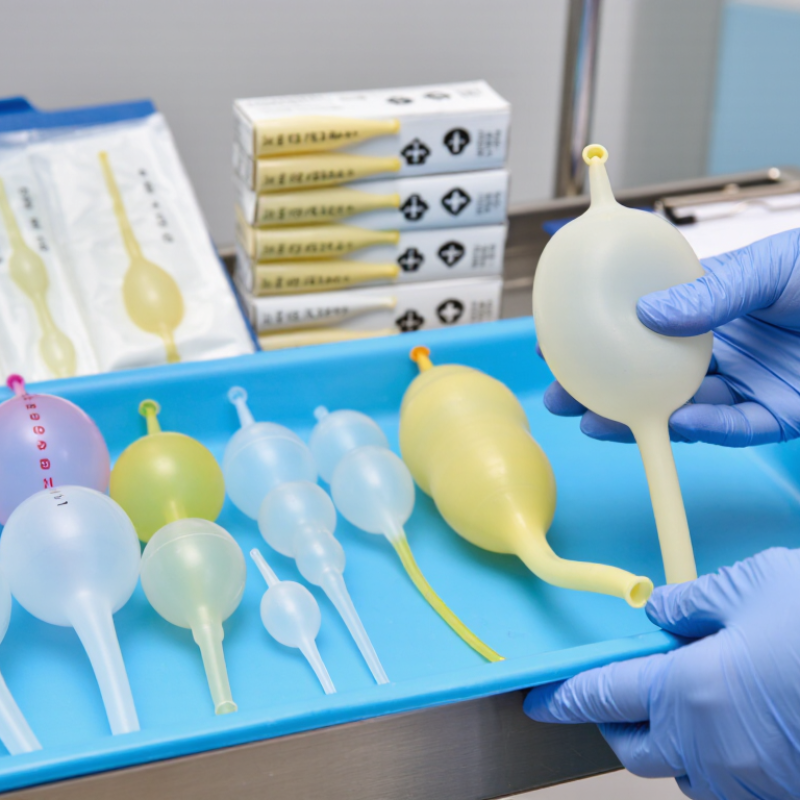
Choosing a Foley balloon catheter starts with its intended use, not its price. A two-way catheter drains urine through one channel and inflates the retention balloon through another. It suits routine bladder drainage when continuous irrigation is unnecessary. A three-way catheter adds an irrigation channel. Clinicians may select it after certain procedures when clots or debris could block drainage. Pediatric versions use smaller sizes and lower balloon volumes. Size must match the patient, anatomy, and clinical plan.
Check the French size, balloon capacity, material, and sterile packaging. Silicone may suit some patients needing longer-term use, while latex can raise allergy concerns. Coated surfaces may improve comfort, but they do not remove infection risks.
Confirm whether the drainage system remains closed and compatible with the catheter. Read the balloon volume carefully. A larger balloon is not automatically safer. It can increase bladder irritation or trauma.
The intended duration also matters. Short-term and long-term products may have different material designs. Ask whether the catheter is suitable for the planned setting and trained caregiver. Do not choose by appearance alone. Product descriptions can be incomplete, and purchasing decisions sometimes rely on assumptions. That is a weak point.
A qualified clinician should verify size, insertion method, balloon inflation, and replacement timing. Stop and reassess if pain, bleeding, fever, leakage, or poor drainage appears. Small details matter.
Buying a Foley balloon catheter requires more than choosing a familiar size.
Check the French gauge and shaft length against the patient’s anatomy and drainage needs. The CDC recommends using the smallest bore that still provides effective drainage. This may reduce urethral trauma. A larger catheter can feel safer, but that instinct is often wrong.
Read the balloon capacity printed on the packaging.
A 10 mL balloon does not mean it should always be filled to 10 mL. Follow the stated inflation volume and use sterile water when required by the instructions. Overinflation may increase bladder irritation, leakage, or unintended pressure. The CDC reports that about 75% of hospital-acquired urinary tract infections involve urinary catheters, so every small selection decision matters.
Material deserves equal attention.
Silicone may offer better internal drainage and is often considered for longer-term use. Latex, including coated latex, may be unsuitable for patients with latex sensitivity. Check the material declaration, radiopacity, sterility, expiration date, and ISO 20696:2018 compliance.
The FDA also expects catheter labeling to identify size, balloon volume, and materials clearly. Do not rely on a supplier’s shorthand. Packaging details can be incomplete. In real purchasing work, I would verify the catalog, physical label, and clinical protocol together. That extra check feels slow, but skipping it is harder to defend.
Buying Foley balloon catheters requires more than checking size and price. Sterility and packaging deserve equal attention. The WHO’s 2022 Global Report on Infection Prevention and Control estimates that 7 of 100 acute-care patients in high-income countries acquire a healthcare-associated infection. In low- and middle-income countries, the estimate reaches 15 of 100. These figures make a sealed device a safety issue, not a cosmetic detail. Check the sterilization method, lot number, expiry date, and sterile-barrier label. Avoid cartons with moisture, crushed corners, broken seals, or tiny punctures.
Tip 1: Inspect the pouch under bright light. The balloon and drainage eyes should remain protected and visibly clean. ISO 11607-1 requires packaging to preserve sterility until opening, when handled correctly. I once treated an intact outer carton as proof of sterility. That was an avoidable mistake. The inner pouch matters more.
Tip 2: Compare the printed French size, balloon volume, material, and instructions with the purchase order.
Tip 3: Check quality consistency across several units. Balloons should inflate evenly, shafts should feel smooth, and connectors should fit securely. A missing instruction sheet is not harmless. It may hide storage limits or inflation guidance. Record lot details during receiving, then separate questionable units for clinical review. Supplier claims help, but physical inspection still catches problems.
Matching the catheter with clinical requirements starts with the patient, not the price. Confirm the intended duration, drainage needs, and insertion setting. A short-term procedure may require different materials from long-term use. Check the French size carefully. A larger catheter is not automatically better. It may increase discomfort or urethral irritation. Balloon volume also matters. Use only the volume specified for that catheter and clinical application. Overfilling can create avoidable complications.
Material selection deserves close attention. Some patients may have sensitivities, while others need a catheter suited to extended placement. Review the drainage eyelets, shaft flexibility, connector design, and urine flow expectations. Small details matter. The package should clearly show sterility, expiry date, lot number, and storage conditions. Confirm that the product meets applicable medical-device requirements in your region. Product documentation should support staff training and traceability.
Buying decisions can become too focused on unit cost. That is a mistake. Consider insertion time, replacement frequency, waste, and staff familiarity. A catheter that looks economical may perform poorly in a difficult clinical situation. Ask whether the supplier provides consistent specifications and responsive technical support. In practice, even experienced teams can overlook balloon compatibility or connector fit. A second review helps. Final selection should follow local protocols and the judgment of qualified healthcare professionals.
Buying a Foley balloon catheter requires more than comparing unit prices. WHO’s 2022 Global Report on Infection Prevention and Control states that healthcare-associated infections affect about 7 in 100 acute-care patients in high-income countries. Supplier quality matters.
Tip 1: Request current ISO 13485 certification, regulatory registration, and manufacturing-site details. Tip 2: Check lot traceability, complaint records, and recall procedures. Tip 3: Ask for product samples and inspect balloon symmetry, connector fit, labeling, and package seals. Small details can expose weak quality control. Tip 4: Compare landed cost, including freight, inspection, taxes, wastage, and emergency shipping. The cheapest quotation may become expensive after delivery problems.
Tip 5: Confirm balloon capacity, French size, material, and intended clinical use against the purchasing specification. Tip 6: Require storage instructions from the product’s approved labeling. Keep cartons dry, protected from sunlight, and away from heat or compression. Use stock rotation, but do not rely on appearance alone. Tip 7: Request written evidence that transport conditions preserve sterility and packaging integrity. ISO 11607 emphasizes packaging systems that maintain sterility until use. A supplier may provide polished documents, yet practical verification is still necessary. I would also review the first shipment more carefully than expected; assumptions sometimes fail.
Use a documented, product-specific review before purchasing. The example weighting below prioritizes safety, traceability, and storage controls over price alone.
How to use this chart: Verify regulatory documentation, sterility and packaging integrity, storage and transport conditions, catheter size and balloon-volume specifications, supplier traceability, and total landed cost. Always confirm the current instructions for use and shelf-life information for the exact product being evaluated.
A two-way catheter drains urine and inflates the retention balloon. A three-way catheter also supports bladder irrigation. Clinicians may choose it when clots or debris could block drainage.
Match the French size and balloon volume to the patient’s anatomy and clinical plan. Pediatric patients usually need smaller sizes and lower balloon volumes. Bigger is not automatically safer.
Silicone may suit some longer-term uses. Latex can create allergy concerns for some patients. Coated surfaces may improve comfort, but they do not remove infection risks.
Check the expiry date, lot number, sterilization details, and sterile-barrier label. Avoid wet cartons, crushed corners, broken seals, or tiny pouch punctures. Look under bright light.
No. The inner pouch matters most. An outer carton can look perfect while the inner barrier has damage. That assumption is a weak point.
The balloon should inflate evenly, and the shaft should feel smooth. Drainage eyes should look clean and protected. Connectors should fit securely.
Yes. Confirm that the drainage system is compatible and remains closed when required. A missing instruction sheet may hide inflation or storage guidance.
Reassess after pain, bleeding, fever, leakage, or poor drainage appears. A qualified clinician should verify insertion, inflation, size, and replacement timing. Small details matter.
Choosing the right Foley Balloon Catheter requires careful attention to clinical purpose, product specifications, and supplier reliability. Start by understanding the available catheter types and their intended uses, then confirm the appropriate size, balloon capacity, and material for the patient and procedure. These details can affect comfort, performance, and compatibility with the planned treatment.
Before purchasing, inspect the catheter’s sterility status, packaging integrity, labeling, and overall quality. Make sure the product matches clinical requirements, including drainage needs, patient considerations, and facility protocols. It is also important to review the supplier’s credentials, pricing, delivery reliability, and storage conditions. Proper storage can help preserve product quality until use. By evaluating these factors together, healthcare facilities can select a Foley Balloon Catheter that is suitable, dependable, and aligned with safe clinical practice.