
0%

A Hemodialysis Catheter Kit is used to establish temporary vascular access for hemodialysis. It supports the removal and return of blood during kidney replacement therapy. Clinicians may use this access when a patient needs urgent dialysis or lacks a mature arteriovenous fistula.

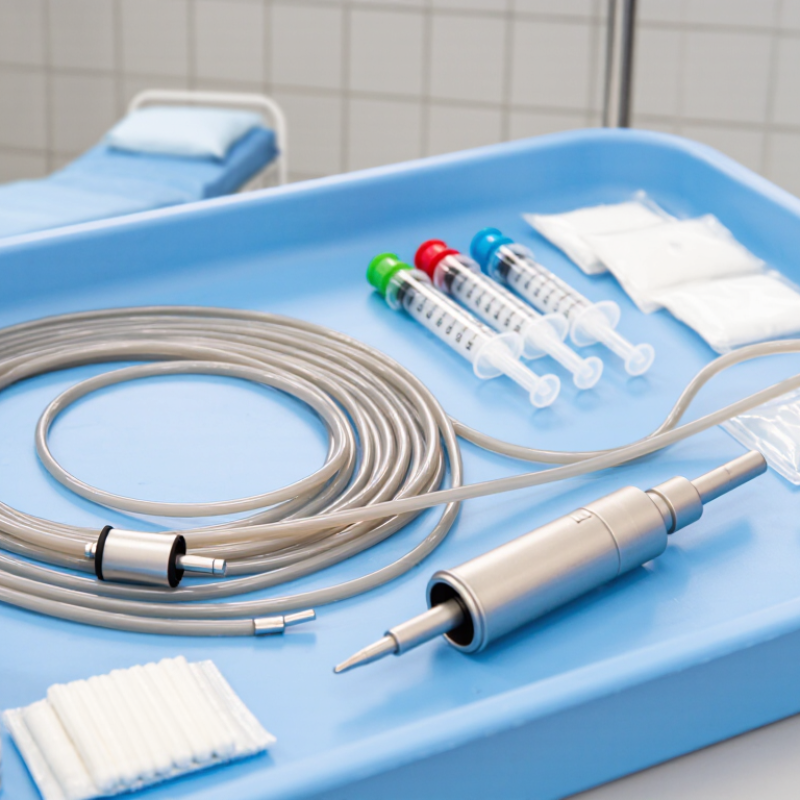
The kit commonly contains a dialysis catheter, introducer needle, guidewire, dilators, syringes, caps, sterile drapes, and skin antiseptic supplies. Each component supports a controlled insertion process. The catheter usually enters a large central vein, often in the neck or chest area. Its two lumens separate blood withdrawal from blood return. This design helps maintain the dialysis circuit.

Small details matter.

A trained healthcare professional selects the catheter size and insertion site according to the patient’s condition. Ultrasound guidance may help improve placement accuracy and reduce avoidable complications. Staff also inspect the packaging, confirm sterility, prepare the skin carefully, and maintain aseptic technique throughout the procedure. These steps help lower the risk of infection, bleeding, air entry, and vessel injury.

However, the kit itself does not make the procedure safe. Clinical judgment, monitoring, and correct aftercare remain essential. Catheter function may change with patient movement, clot formation, or poor positioning. That reality is sometimes underestimated. This guide will explain what a Hemodialysis Catheter Kit contains, how its components support catheter placement, and why proper handling matters in professional dialysis care. Information should complement, not replace, institutional protocols and qualified medical supervision.
What Is a Hemodialysis Catheter Kit Used For?

What Is a Hemodialysis Catheter Kit?

A hemodialysis catheter kit is a sterile, organized set of medical components used to place a dialysis catheter into a large vein. The catheter provides two channels: one removes blood for filtration, and the other returns treated blood. It is commonly placed in the neck, chest, or groin, depending on the patient’s condition and clinical plan.

A typical kit may contain the catheter, guidewire, introducer needle, dilators, syringes, scalpel, caps, clamps, and a sterile dressing. Contents can vary. Some kits also include ultrasound guidance supplies or local anesthetic materials. The packaging helps clinicians find essential items quickly, but it does not replace training or careful judgment.

During placement, a qualified clinician uses sterile technique and usually confirms the catheter’s position with imaging. The site must be checked for bleeding, infection, poor blood flow, or catheter displacement. Small details matter, such as keeping connections closed and inspecting the dressing during treatment. In practice, no kit fits every patient perfectly. Vessel size, prior access, and emergency conditions can change the procedure. That variability deserves more attention.

What Is a Hemodialysis Catheter Kit Used For?

A hemodialysis catheter kit contains the sterile tools used to place a temporary or tunneled double-lumen central venous catheter. The catheter provides separate blood-draw and blood-return pathways so blood can circulate through the dialysis machine.

The chart shows common component counts in a representative double-lumen catheter placement kit. Exact contents vary by procedure, catheter type, and clinical setting. A trained clinician uses the kit with sterile technique and image guidance when appropriate.

What Components Are Included in the Kit?

A hemodialysis catheter kit supports the sterile placement of a temporary or tunneled vascular catheter. Its main purpose is to create reliable access for blood removal and return during dialysis. The kit is not a complete treatment system. It supports one carefully controlled procedure.

Typical components include an introducer needle, guidewire, dilators, and a vascular catheter. Many kits also contain syringes, local anesthetic supplies, saline, a scalpel, and a needle holder. Sterile gowns, gloves, drapes, gauze, and skin-preparation materials help maintain a clean field. Some packages include ultrasound probe covers, sutures, catheter clamps, antimicrobial dressings, and needleless caps. Contents vary by facility and catheter type. The word “complete” can be misleading.

The CDC’s dialysis safety reporting supports strict infection-control preparation. Its Core Interventions program reported about a 30% reduction in bloodstream infections among participating hemodialysis facilities. That finding makes small components important, especially disinfecting supplies, sterile barriers, and secure dressings. KDOQI guidance also emphasizes ultrasound guidance and proper catheter-tip positioning when clinically appropriate. In practice, staff may discover that a missing cap or incompatible connector delays the procedure. That detail deserves more attention. Kit checks should match the catheter model, ultrasound technique, local policy, and patient condition.

What Is a Hemodialysis Catheter Kit Used For? - What Components Are Included in the Kit?
Data Dimension Component or Feature Typical Contents or Characteristics Primary Use Important Clinical Notes
Purpose Hemodialysis catheter kit A sterile collection of access, insertion, protection, and procedure supplies To support placement of a temporary or tunneled central venous catheter for hemodialysis Used when rapid or short-term vascular access is needed, or when an arteriovenous fistula or graft is not available for use
Access device Dual-lumen hemodialysis catheter Two separate internal lumens, commonly identified as arterial and venous; available in different lengths and configurations Allows blood to leave the patient for dialysis and return after filtration Catheter selection depends on the insertion site, patient anatomy, blood-flow requirement, and whether the catheter is tunneled or non-tunneled
Vascular entry Access needle Sterile hollow needle used to enter a selected central vein Provides initial venous access during the catheter-placement procedure Placement is commonly performed using ultrasound guidance when available and appropriate
Guidewire system Flexible guidewire Flexible wire, often supplied with a soft or shaped tip and a mechanism for controlled advancement Creates a pathway over which the dilator and catheter can be advanced The guidewire must remain controlled throughout the procedure; resistance should not be overcome by force
Tract preparation Tissue dilators One or more progressively larger dilators Enlarges the soft-tissue and venous entry tract before catheter insertion Dilator size and sequence vary according to the catheter design and insertion technique
Insertion pathway Introducer sheath or peel-away sheath Sterile sheath that may split or peel away after the catheter is positioned Facilitates catheter advancement into the vein while helping maintain the access tract Included in many catheter systems, but not necessarily in every kit configuration
Medication preparation Sterile syringes and needles Various syringe sizes and needles for aspiration, flushing, local anesthetic administration, or medication preparation Supports blood aspiration, lumen flushing, and administration of procedure-related medication The exact quantity and sizes depend on the kit design and institutional protocol
Local anesthesia Local anesthetic supplies May include a syringe, needle, and a local anesthetic ampule or vial; medication may also be supplied separately Reduces discomfort at the insertion or tunneling site Availability varies; the operator must verify the medication, concentration, expiration date, and allergy history
Skin antisepsis Antiseptic preparation Sterile or individually packaged skin antiseptic applicator or solution Prepares the skin and reduces surface microorganisms before catheter insertion Antiseptic selection should follow facility policy, patient allergies, and current infection-prevention guidance
Sterile field Sterile drapes and towels Fenestrated drape and additional sterile towels or barrier materials Creates and maintains a sterile procedural field Central venous catheter insertion generally requires maximal sterile barrier precautions
Incision Scalpel or small blade Sterile blade for a small skin incision when needed Enlarges the skin opening to facilitate passage of the dilator or catheter Not included in every kit; use is determined by the insertion technique and clinician judgment
Catheter fixation Suture and needle Sterile nonabsorbable suture or an alternative securement component Secures the catheter at the skin and helps prevent accidental displacement Tunneled catheters may also rely on a subcutaneous cuff for tissue ingrowth and stabilization
Lumen protection Sterile caps or connectors Protective end caps or needleless connectors for the catheter hubs Helps maintain a closed system and protects catheter lumens between treatments Components should be compatible with the catheter and dialysis equipment used by the facility
Lumen patency Flush solution Prefilled or manually prepared sterile saline; an anticoagulant lock solution may be used according to protocol Flushes blood and medication residue and helps maintain lumen patency Locking solution, volume, and timing must follow the catheter instructions and institutional policy
Wound protection Sterile dressing Transparent semipermeable dressing, gauze dressing, or other sterile catheter-site dressing Covers and protects the insertion site after placement The dressing should remain clean, dry, intact, and changed according to infection-prevention procedures
Monitoring and safety Procedure accessories May include a needle holder, forceps, measuring device, specimen cup, or sharps container accessory Supports safe handling, measurement, disposal, and completion of the procedure Accessory items vary substantially between kits and may be supplied separately
Kit variation Tunneled versus non-tunneled configuration Non-tunneled kits are generally intended for short-term access; tunneled kits may include tunneling instruments and a cuffed catheter Matches the access system to the expected duration and clinical setting of dialysis Not all components are present in every kit; the package label and instructions for use determine the actual contents
General note: Hemodialysis catheter kits are sterile procedure packs, and their contents differ by catheter type, insertion method, intended access site, and local protocol. Healthcare professionals should confirm the package contents, catheter specifications, sterility, and instructions for use before the procedure.

How Is the Kit Used During Catheter Placement?

A hemodialysis catheter kit supports the controlled placement of temporary or tunneled venous access. Its contents commonly include a catheter, guidewire, dilators, introducer needle, syringes, sterile drapes, caps, and flushing solution. The exact contents vary by procedure and facility.

During placement, the clinician confirms the patient, reviews consent, and selects the safest vein. Ultrasound helps identify the vessel and reduce accidental puncture. The skin is disinfected, and a large sterile field is created. Local anesthetic limits discomfort. A needle enters the vein, followed by a guidewire. Dilators widen the pathway before the catheter advances over the wire. The guidewire is then removed, and each lumen is aspirated and flushed to check patency. The catheter is secured and covered with a sterile dressing.

The KDOQI 2019 Vascular Access Guideline recommends ultrasound guidance and maximal sterile precautions when appropriate. These steps matter because catheter-related bloodstream infection remains a serious clinical risk. The USRDS 2023 Annual Data Report found that roughly four in five U.S. patients beginning hemodialysis used a catheter in 2021. That number shows why careful placement is not a minor detail.

A kit does not make the procedure safe by itself. Sterile technique, imaging, anatomical judgment, and post-placement confirmation still depend on trained professionals. In practice, small omissions can matter. A rushed flush, loose dressing, or incomplete documentation may create avoidable problems. The process also deserves reflection: convenience should never replace patient-specific assessment.

When Is a Hemodialysis Catheter Kit Needed?

What Is a Hemodialysis Catheter Kit Used For?

When Is a Hemodialysis Catheter Kit Needed?

A hemodialysis catheter kit is used to place a temporary or tunneled catheter into a large vein. The catheter creates rapid access for dialysis blood flow. Kits usually include sterile drapes, guidewires, dilators, needles, syringes, and catheter components. Clinicians use imaging guidance when available. This helps reduce placement errors.

A catheter kit is needed when dialysis must begin urgently. It may be used for severe kidney failure, dangerous potassium levels, fluid overload, or serious acid buildup. It is also considered when an arteriovenous fistula or graft is not ready. The KDOQI 2019 Vascular Access Guidelines recommend planning permanent access when possible, while recognizing urgent clinical situations. Real decisions are less tidy than flowcharts.

The United States Renal Data System 2023 Annual Data Report recorded 135,972 new kidney failure cases in 2021. Many patients therefore require timely access decisions. However, catheter use carries infection and clotting risks. The CDC continues to identify bloodstream infections as a major concern in outpatient hemodialysis. A catheter may be lifesaving, but it is not a harmless shortcut. Staff must inspect the exit site, maintain sterile connections, and reassess the access plan regularly. Small lapses matter. Planning can still improve.

What Safety Measures Guide Its Use?

What Is a Hemodialysis Catheter Kit Used For?

A hemodialysis catheter kit supports trained clinicians when creating or maintaining vascular access for dialysis. It may contain sterile drapes, protective equipment, antiseptic supplies, syringes, dressings, and catheter components. The exact contents differ by procedure and facility policy. Safe use begins with confirming the patient’s identity, allergies, treatment plan, and catheter site. Hand hygiene and appropriate protective equipment are essential. The clinician should inspect packaging for damage, check expiration dates, and maintain a sterile field throughout the procedure. A rushed setup can look clean and still be unsafe.

Tips: Keep every sterile item within view. Avoid touching key connection points. Use clear communication during each step. Check the catheter for secure placement, bleeding, swelling, pain, or unusual drainage. Record the site condition and report changes promptly. After access, follow the prescribed flushing, clamping, dressing, and monitoring protocol. Never improvise with missing supplies. Ask a senior clinician when instructions are unclear.

Infection prevention requires consistent attention after the procedure, not only during insertion. The access site should remain clean, dry, and protected according to clinical guidance. Staff should monitor temperature and other possible infection signs. Breathing difficulty, chest pain, severe bleeding, or sudden weakness requires urgent medical assessment. Even experienced teams can miss small details during busy shifts. A second check may feel unnecessary, but it can reveal a loose connection or incomplete documentation. These safety habits protect both the patient and the healthcare team.

FAQS

What is a hemodialysis catheter kit?

It is a sterile set of components for placing a dialysis catheter in a large vein. The catheter has two channels. One removes blood for filtration. The other returns treated blood. Placement may occur in the neck, chest, or groin.

What items are commonly included?

A typical kit may include a catheter, guidewire, introducer needle, dilators, syringes, caps, clamps, and sterile dressing. It may also contain a scalpel, saline, local anesthetic supplies, sutures, or ultrasound probe covers. Contents vary.

Is every kit complete for every procedure?

No. The word “complete” can mislead. A kit may lack a compatible connector, cap, or dressing. Staff should compare the contents with the catheter type, facility policy, and patient’s condition.

Who should use the kit?

Only qualified healthcare professionals should place the catheter. Training, sterile technique, imaging, and anatomical judgment remain essential. The kit organizes supplies. It does not replace clinical skill.

How is the catheter usually placed?

The clinician confirms the patient and selects a suitable vein. Ultrasound may help locate the vessel and reduce accidental puncture. After skin disinfection and local anesthetic, a needle enters the vein. A guidewire follows. Dilators widen the pathway. The catheter then advances over the wire.

What happens after the catheter is inserted?

The guidewire is removed. Each catheter channel is aspirated and flushed to check blood flow. The catheter is secured and covered with a sterile dressing. Imaging may confirm the catheter tip’s position. Not always perfectly.

What problems require close monitoring?

Staff should check for bleeding, infection, poor blood flow, and catheter displacement. They should inspect the dressing during treatment. Closed connections and clean handling also matter. A loose dressing can create avoidable trouble.

Why are sterile barriers and disinfecting supplies important?

Catheter-related bloodstream infections are serious clinical risks. Sterile gowns, gloves, drapes, skin preparation, disinfecting materials, and secure dressings help reduce contamination. Small components matter. The process still deserves careful review.

Can emergency conditions change the procedure?

Yes. Vessel size, previous access, anatomy, and urgency may affect the clinical plan. No kit fits every patient perfectly. Convenience should never replace patient-specific assessment. That limitation is easy to overlook.

Conclusion

A Hemodialysis Catheter Kit is a prepared collection of sterile medical supplies used to support the placement of a catheter for hemodialysis access. The kit commonly includes the catheter, guidewire, dilator, introducer components, syringes, needles, local anesthetic supplies, sterile drapes, protective gowns and gloves, antiseptic materials, dressings, and flushing solutions. The exact contents may vary according to the procedure and clinical setting.

During catheter placement, trained healthcare professionals use sterile technique and appropriate imaging guidance when available. They prepare the insertion site, administer local anesthesia, establish access, and guide the catheter into the selected blood vessel before securing and dressing it. A Hemodialysis Catheter Kit may be needed when a patient requires urgent dialysis, temporary vascular access, or cannot immediately use a fistula or graft. Safety measures include confirming patient identity and indications, checking package integrity and expiration dates, maintaining strict infection control, monitoring for bleeding or complications, and following facility protocols for catheter verification, flushing, and ongoing care.

Ethan Carter

Ethan Carter

Ethan Carter is a professional marketing specialist dedicated to helping businesses make informed decisions through clear, practical, and industry-focused communication. With extensive knowledge of the company’s products, services, and customer needs, Ethan transforms complex information into......