
Choosing a Double J Stent supplier is not just a price comparison. The decision affects product consistency, delivery planning, and the documentation available to clinical and procurement teams. A polished catalog can look reassuring, but it cannot answer every practical question. Details matter.
Start by checking whether the supplier can provide clear product specifications, including available sizes, materials, packaging, and intended use. Ask how product batches are identified and traced. Review applicable quality documentation and confirm that claims match the markets where the products will be supplied. Requirements vary, so avoid assuming one certificate settles every question. Ask again.
Reliability also shows up in ordinary interactions. Can the supplier explain lead times, stock availability, and what happens when an order is delayed? Are responses specific, or do they rely on broad promises? Request current documents and references where appropriate, then compare them with your organization’s purchasing and clinical requirements. A low quote may still carry hidden costs if communication is weak or supply is inconsistent.
No supplier is perfect. That is worth remembering. Look for evidence of a thoughtful quality process, transparent communication, and a practical approach to complaints or product concerns. This guide outlines the questions that help separate confident marketing from verifiable capability. The best choice is not necessarily the largest company or the cheapest offer. It is the supplier whose products, records, and service can be assessed clearly before a purchasing decision is made.
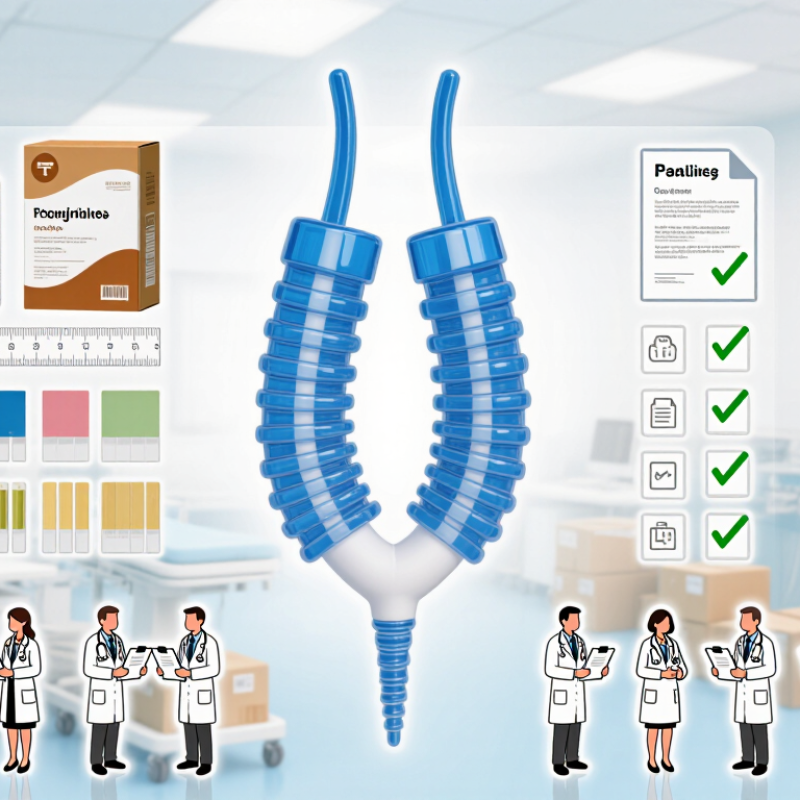
Choosing a Double J stent supplier starts with fit, not a catalog headline. Common options span 4.7–8 Fr and 12–30 cm, but those ranges do not make every combination suitable. Fr describes outer diameter; length should reflect the patient’s anatomy and the clinician’s plan. Ask suppliers for a clear size matrix, including available increments and measurement methods. Details matter.
A 4.7 Fr option may suit cases where a smaller profile is preferred, while other diameters may be selected for different clinical needs. These are not interchangeable rules. Verify how each length is measured, and ask whether it refers to the stent’s straight section or overall device. Confirm material, coil configuration, radiopacity, and compatibility with the intended procedure. A size chart helps, but it cannot tell the whole story.
A dependable supplier should provide traceable technical documentation, sterile packaging details, lot identification, and clear handling instructions. Request dimensional drawings when available, then compare them with clinical requirements. Check lead times too; a suitable size that arrives late is not a practical choice. Some specifications seem obvious until teams measure them differently. Final selection belongs with qualified clinicians, not a purchasing spreadsheet.
When comparing Double J stent suppliers, ask to see a current ISO 13485:2016 certificate and verify its scope. It should cover the relevant medical devices and manufacturing activities, not merely an unrelated site. Check audit dates, manufacturing locations, and any exclusions. Paperwork alone is not proof. Ask how the supplier controls design changes, incoming materials, production records, and complaint investigations.
ISO’s 2022 Survey of Certifications recorded more than 34,000 ISO 13485 certificates worldwide. That figure shows broad adoption, not that every certified supplier makes equally reliable stents. ISO 13485 focuses on medical-device quality management. ISO 14971:2019 addresses risk management across a device’s lifecycle; it is not a substitute quality-system certificate. Ask for evidence of its use, such as a risk-management plan, hazard analysis, and documented reviews.
Look for risks tied to actual use: a kinked drainage lumen, a rough tip, or a connector that does not fit securely. Ask how these hazards are assessed and reduced, and how test results link to design requirements. Request traceability from polymer batch to finished device, plus records for sterilization validation, packaging integrity, and shelf-life testing. Details matter. If a supplier cannot explain a failure investigation clearly, pause and ask for the underlying records. Audits can miss things; review recent corrective actions, not just polished procedures.
When evaluating a double J stent supplier, distinguish FDA 510(k) clearance from “FDA approval.” A 510(k) decision applies to a specific device and intended use, not every product a supplier sells. Search the FDA 510(k) database by device name or applicant, then compare the cleared indications, materials, and size range with the offered stent. Check the decision letter and summary, not just a certificate image. Details matter. MedTech Europe’s 2024 Facts & Figures report estimates the European medical technology market at about €170 billion in 2023. That scale makes dependable traceability essential, but market size is not proof of a supplier’s compliance.
For EU sales, request evidence of conformity under Regulation (EU) 2017/745, including the applicable CE certificate and its scope. Confirm the named manufacturer, device family, and relevant manufacturing sites; a distributor’s paperwork may not cover the actual legal manufacturer. Then match the UDI on the package label to the product records and documentation. FDA’s Global Unique Device Identification Database can help verify U.S. device details; EU UDI records should also be checked where available. A tidy file can still miss one configuration. Ask for the exact model and intended-use documentation, and resolve discrepancies before purchase.
When assessing a Double J stent supplier, ask for sterilization validation records, not just a certificate. ISO 11135 covers ethylene oxide (EO) sterilization; ISO 11137 covers radiation sterilization. These methods are not interchangeable, and the supplier should explain which process applies to the specific device and packaging. The FDA’s medical-device sterilization guidance estimates that EO is used for about 50% of sterile medical devices in the United States. That figure shows why EO documentation is common, but it does not prove a particular stent is suitable for that process.
For EO-sterilized products, review cycle validation and evidence that residual EO levels meet applicable requirements. For radiation-sterilized products, check dose setting, dose audits, and material compatibility. Then examine the sterile barrier under ISO 11607: packaging should protect the stent through sealing, storage, and transport. Request seal-strength and integrity test results, plus aging and distribution-test evidence. Ask to see the actual packaging configuration; a validation for a different pouch or tray is not enough.
Small details matter. Inspect sample packs for clear seals, punctures, and legible lot and sterilization information. Records should connect the device lot to its sterilization and packaging batches. A polished certificate alone can feel reassuring, but it may leave gaps. I would still ask how deviations are handled and how often validations are reviewed. FDA sterilization guidance and the ISO standards offer useful benchmarks; supplier-specific records show whether those controls reach the stent in your hands.
How to Choose the Best Double J Stent Supplier?
Compare Supplier Performance: Lot Traceability, Defect Rates, and Lead Times
Choosing a Double J stent supplier means checking whether its records match the product you receive. Request lot-level documentation linking each shipment to manufacturing, inspection, and release records. Confirm that identifiers are readable on cartons and unit packs. Ask how complaints and quality concerns are traced to affected lots. Records matter only if staff can retrieve them quickly. Test a sample request.
Compare defect rates using the same definitions and time periods. Ask what counts as a defect, how many units were assessed, and whether reported figures include returns or only internal inspections. A low percentage may look reassuring, but a small sample can distort the picture. Request trend data and an explanation of recurring issues. No process is perfect; clear corrective-action records show how problems are investigated and addressed.
Tips: Compare actual lead times with quoted ones, including recent delays. Ask how shortages are communicated and whether delivery estimates are updated promptly. Check performance across several orders, not one smooth shipment.
| Evaluation Dimension | Supplier A | Supplier B | Supplier C | Supplier D | What to Verify |
|---|---|---|---|---|---|
| Lot traceability completeness | 100% of sampled lots | 98% of sampled lots | 96% of sampled lots | 99% of sampled lots | Can the supplier link each finished-device lot to production records, inspection results, and relevant material records? |
| Traceability retrieval time | 2 hours | 1 business day | 4 hours | 1 business day | Run a documented mock trace and record how quickly complete, consistent records are supplied. |
| Nonconforming units | 420 ppm | 780 ppm | 610 ppm | 350 ppm | Compare the same reporting period, product scope, inspection method, and denominator; request the underlying quality data. |
| Corrective-action closure | Median 28 days | Median 42 days | Median 35 days | Median 30 days | Review investigation quality, root-cause evidence, effectiveness checks, and overdue actions—not closure time alone. |
| Standard production lead time | 6 weeks | 8 weeks | 7 weeks | 5 weeks | Confirm the clock start point, order quantity, product configuration, and whether the estimate includes release testing. |
| On-time delivery | 96% | 91% | 94% | 97% | Ask for performance over a defined period and clarify how partial shipments and agreed schedule changes are counted. |
| Change notification | Formal advance-notice process | Process documented; verify timing | Formal advance-notice process | Process documented; verify timing | Check how changes affecting materials, manufacturing, testing, or specifications are assessed and communicated. |
| Overall assessment | Strong traceability and balanced delivery performance | Acceptable profile; review traceability gaps and lead time | Balanced profile; confirm delivery consistency | Strong delivery profile; validate traceability and quality records | Use documented evidence, product requirements, and risk-based qualification criteria when making a selection. |
Search the public device database by device name or applicant. Compare the cleared use, materials, and size range with the exact model offered. Check the decision letter and summary, not only a certificate image.
Request evidence of conformity under EU Regulation 2017/745. Confirm the certificate covers the manufacturer, device family, and relevant production sites. A distributor’s documents may not cover the actual manufacturer.
Match the UDI on the package with the product records and documentation. Check the exact model and intended use. One configuration can be missing.
Ask for records connecting each shipment to manufacturing, inspection, and release. Confirm lot identifiers are readable on cartons and individual packs. Try requesting a sample record.
Ask for the defect definition, assessment period, and number of units reviewed. Check whether figures include returns or only internal inspections. Small samples can distort the picture.
Request trend data and corrective-action records. Ask how complaints are linked to affected lots and investigated. Clear records matter. No process is perfect.
Compare quoted lead times with actual delivery dates across several orders. Ask how shortages are reported and whether estimates are updated promptly. One smooth shipment proves little.
Ask the supplier to resolve differences before purchase. Check the exact model, intended use, and manufacturing details. A tidy file can still be incomplete. That deserves another look.
Choosing the right Double J Stent supplier starts with clinical fit. Compare available diameters, commonly 4.7–8 Fr, and lengths, often 12–30 cm, against the intended patient population and procedure requirements. Confirm that the supplier can provide consistent sizing and clear product specifications. Then review its quality systems, including alignment with ISO 13485:2016 for medical-device quality management and ISO 14971:2019 for risk management. Verify that relevant market approvals and documentation are appropriate for the regions where the product will be used, including applicable FDA 510(k), EU MDR 2017/745, and UDI requirements.
Sterility and packaging controls also deserve careful review. Ask how sterilization is validated under applicable standards such as ISO 11135 or ISO 11137, and how packaging integrity is assessed in line with ISO 11607. Finally, compare operational performance using measurable evidence: lot traceability, documented defect rates, and reliable lead times. A thorough evaluation of clinical suitability, quality, compliance, sterility, and delivery can help healthcare organizations select a supplier that supports consistent product availability and dependable care.